AUSTRIA • COFFEE HOUSES • TRAVEL STORIES
Vienna: The City That Never Tells You Everything
A Melange, a waltz and a city that always keeps something back.
By Rob Wheatley – Program Director & traveler
First published 15 April 2015 · Research checked 20 October 2026
Vienna, Austria, rewards a slower visit: coffee houses with long memories, music woven into its streets and an old centre that changes after dark. Through Café Central, Hawelka, Kohlmarkt and St. Stephen’s, this is my returning visitor’s view of a city best explored with curiosity and time for another cup.
The cup arrives on a silver tray with a glass of water beside it, and nobody rushes me. Nobody ever does.
I’ve found my spot in a Viennese coffee house: marble tabletop, bentwood chair, a ceiling high enough to hold a few centuries of conversation. A Melange arrives, and I settle into the ritual I’ve kept every time I’ve come back to this city.
And I do keep coming back. Over three seasons on Viking’s Grand European Cruise, Vienna became a place I thought I knew. The tram turns feel familiar. So does the street that smells of roasting coffee at ten in the morning. Yet every time I step outside, the city gives me a little less than I expected and makes me want a little more.
Vienna teases. It lets you think you’ve worked it out, then hands you a courtyard you’ve never seen.
Planning beyond this visit? Then use my Austria travel guide to choose your next stops and build a journey that fits your time.
The city that hummed
To understand Vienna, you have to hear it, because this is a city that was composed.
Mozart settled here in 1781, a young man from Salzburg with an enormous talent and a restless temper. Some of his greatest works followed. By 1791 he was gone, aged 35. His burial at St. Marx was in a shared grave, following the practice of the time; the precise location is unknown. The familiar tale of an abandoned genius is rather less tidy than the legend suggests.
Then Beethoven moved to Vienna in 1792, also an outsider. He turned its musical world upside down and, despite progressive hearing loss, kept composing. When he died in 1827, an estimated 20,000 people attended his funeral procession.
And then a son who was truly Vienna’s own. Franz Schubert was born here in 1797, wrote songs that seem to breathe, and died at 31. Today, both he and Beethoven rest among the musicians’ graves of honour in the Central Cemetery.
That’s the quiet secret of Vienna’s music. So many of its great names weren’t born here. Instead, they came, drawn by the city’s hunger for sound, and Vienna adopted them.
Where Freud watched the world
Then I walk, as I always have, towards Café Central.
On past visits, stepping through the door meant soaring vaulted ceilings, with pillars rising like a cathedral to coffee. This is where I think of Freud, the man who tried to map the human mind. I imagine him contemplating the people around him, while the whole room seems to be thinking.
That picture belongs to my imagination rather than a documented scene at a particular table. Freud is among the café’s historical visitors; Café Landtmann is another address closely associated with him. In Vienna, even choosing where to have coffee can turn into a small research project.
Before you go: checked on 20 October 2026, Café Central’s own notice says the Palais Ferstel café is closed for renovation, with reopening planned for winter 2026. Its temporary counterpart, DECENTRAL, is at Freyung 3/1. Check the café’s current announcement before building your day around those vaulted ceilings.
The musty one: Café Hawelka
But my heart belongs to somewhere smaller, darker and far less polished. Café Hawelka.
It’s morning when I push open the door, and the room is still half asleep. Dark wood. Walls crowded with posters and drawings. Little tables squeezed so close that your elbows join the neighbour’s conversation.
Then there’s that smell: an almost musty aroma of old wood, old paper and decades of coffee, competing with the cup in front of me. The room feels as though it has politely declined several generations of interior designers.
Leopold and Josefine Hawelka took over the premises in 1939. War forced the café to close within months; in December 1945, they reopened it. According to the family’s history, coffee was made on a wood stove, and Leopold collected firewood in the Vienna Woods.
Meanwhile, Vienna was divided into American, British, French and Soviet occupation sectors, with the central district under joint administration. The occupation lasted until 1955. Against that uncertainty, a familiar table and a warm cup must have meant rather more than a refreshment stop.
A room that became a refuge
Writers and painters gradually made the Hawelka theirs. After Café Herrenhof closed in 1961, more of its literary circle moved here. By the sixties and seventies, the room was a meeting place for Vienna’s artists: somewhere to see, be seen and argue.
Knowing that changes the way I look around. The posters become more than decoration, and the crowded tables seem to hold rather more than coffee cups.
I put down my cup a little more gently.
This is why I like taking travel slowly. A room can look shabby in a photograph and feel magnificent once you know what happened inside it.
Buchteln: a very good reason to linger
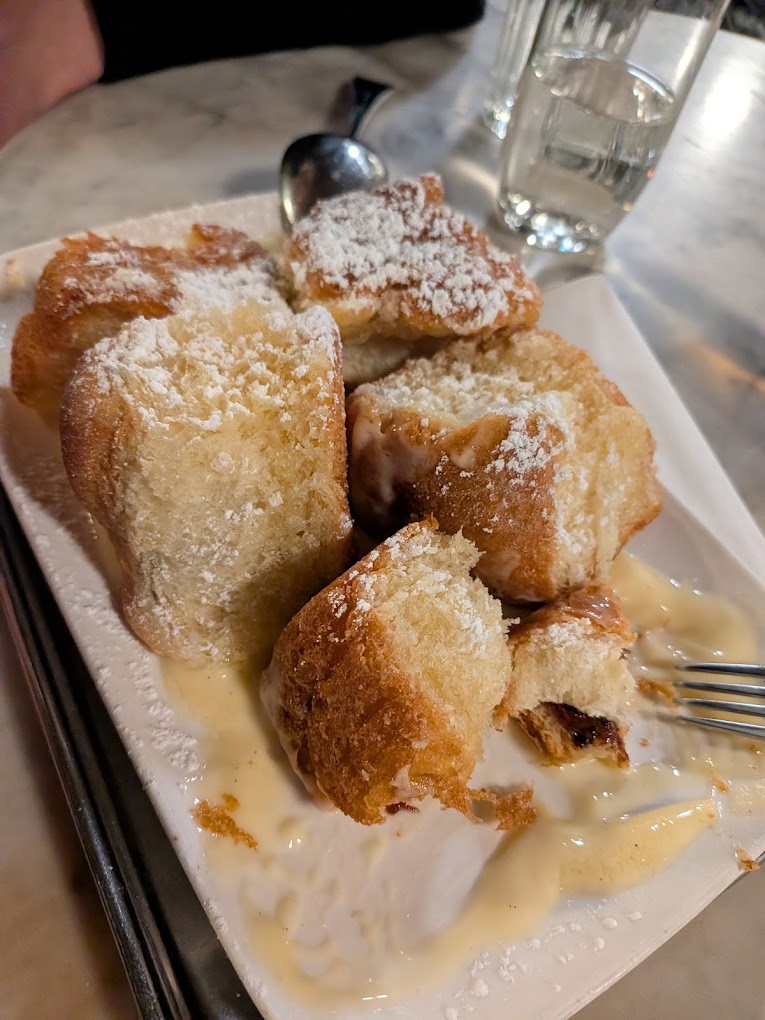
And because Vienna understands comfort, there are Buchteln: soft, sweet yeast buns, baked together and often filled with jam. The name alone seems designed to make you loosen your belt.
They belong to the same comforting world as Germknödel, but the distinction matters. Buchteln are baked; the familiar Germknödel is steamed and often served with plum filling, poppy seeds and sugar.
Hawelka’s famous Buchteln are an evening tradition, rather than a breakfast promise. The family describes their scent drifting through the room late at night. If you’re coming especially for them, ask about that day’s availability.
So my morning coffee and the café’s celebrated buns belong to different parts of the day. Fortunately, Vienna has never struggled to give me a reason to come back.
For me, this is food tourism at its best: something delicious that also tells you where you are.
Kohlmarkt: the long way to the next coffee
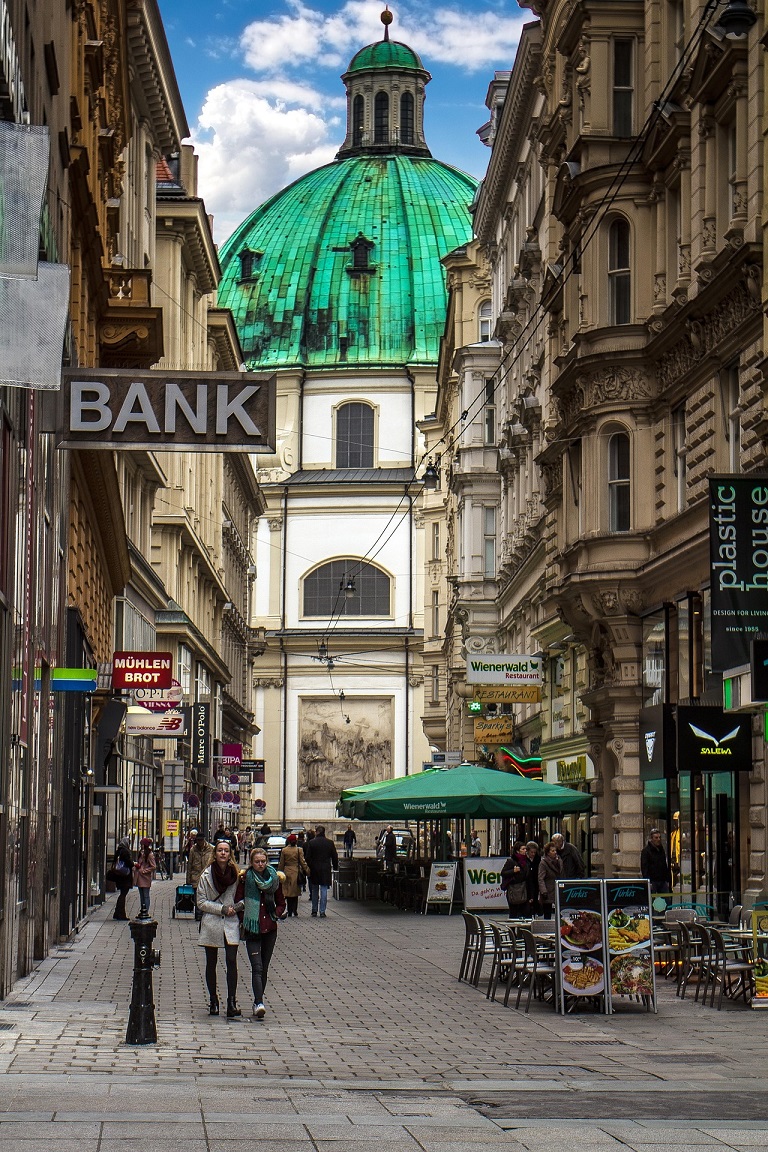
Between cups, I walk. Kohlmarkt makes a fine excuse: an elegant stretch of the old centre leading towards Michaelerplatz and the Hofburg.
The windows have a way of making you slow down, whether your interests run to pastries or things your bank manager would prefer you didn’t notice. Demel, the historic confectioner at Kohlmarkt 14, gives the pastry contingent a particularly strong argument.
From here, follow the Graben towards St. Stephen’s Cathedral. You can link these central streets into a short walk, but I wouldn’t give it a stopwatch. Vienna is very good at turning one corner into another hour.
That’s my preferred approach to exploring a city: choose an area, understand a little of its story, then leave room to be distracted.
Vienna after dark
Then evening comes, and Vienna becomes a different city altogether.
As the light fades, the grand buildings of the Ringstrasse begin to glow. The Opera House warms to a soft gold, while the Rathaus lifts its Gothic spires into the dusk like a stone fairytale.
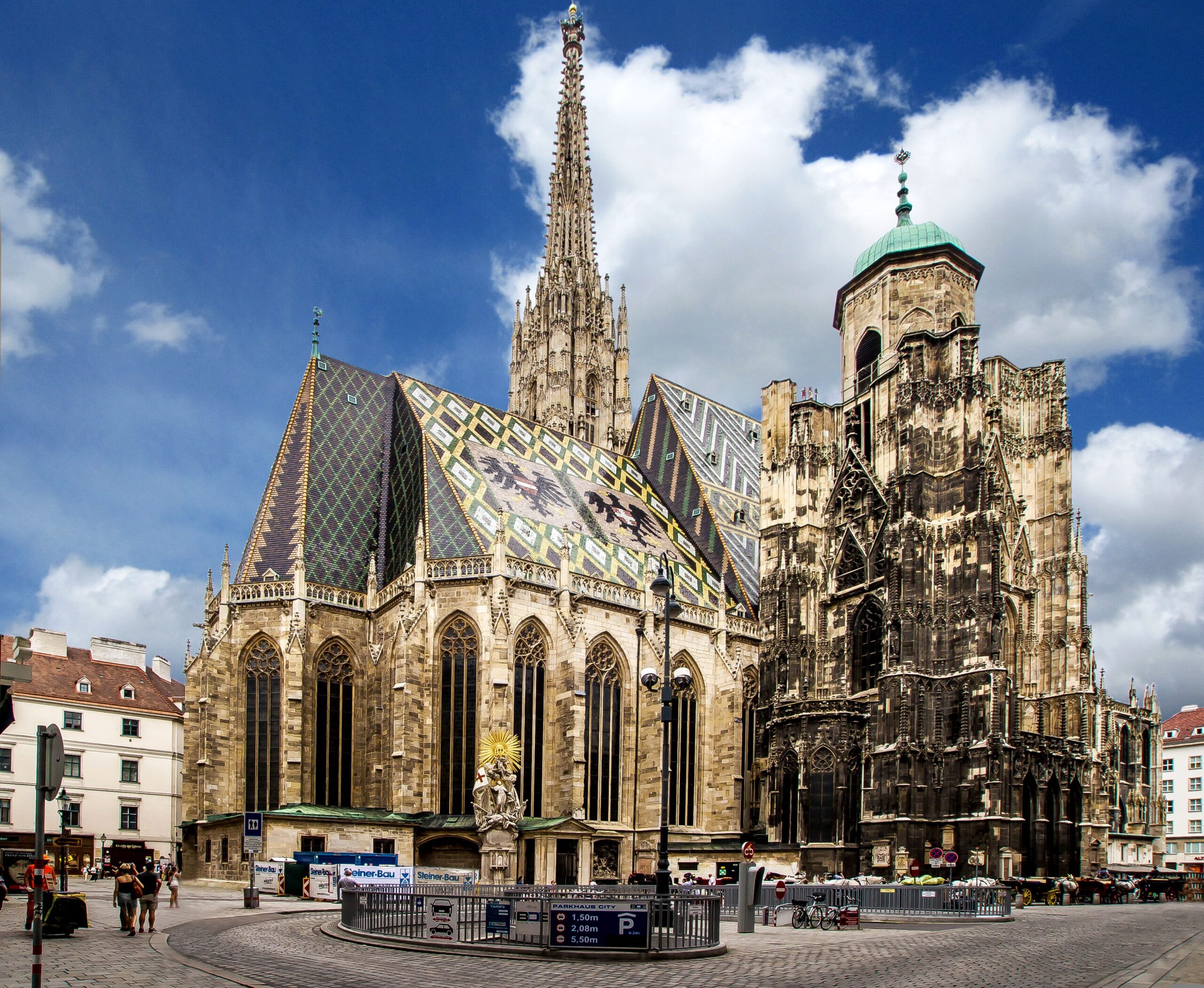
Back in the old centre, the tiled roof of St. Stephen’s Cathedral catches the last light, a patterned quilt laid across the sky. Around the Hofburg, statues seem to step forward as the lamps come on.
The Baroque domes turn bronze. Beneath them, the cobbles shine. Somewhere a violin begins, and the whole city leans in to listen.
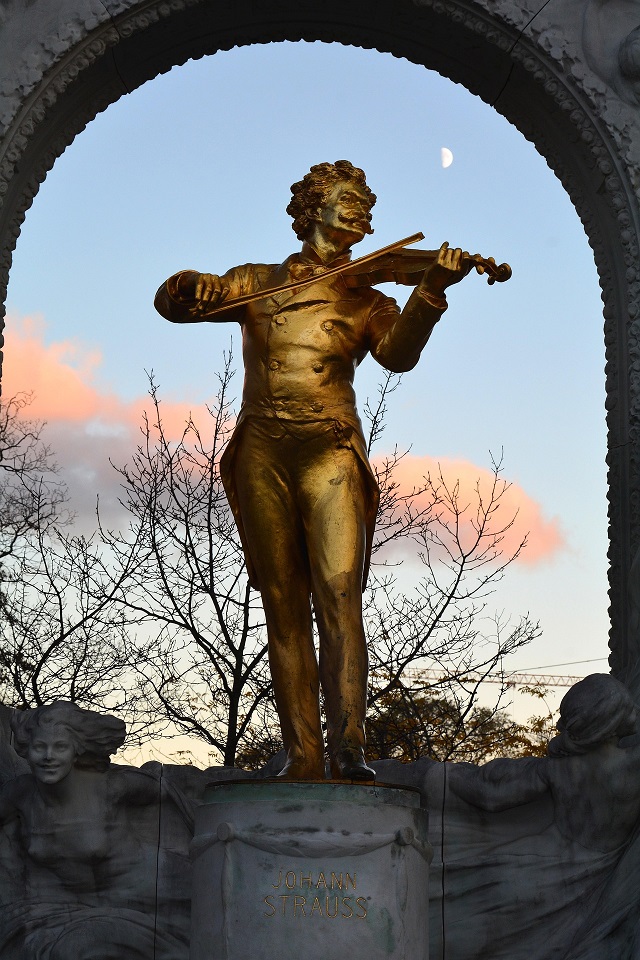
The Strauss waltz is never far away. Johann Strauss II, born here in 1825, gave Vienna a signature sound. In the Stadtpark, his golden monument plays on as if the music never stopped. Walking beneath those lit façades, you almost expect a waltz to begin on its own.
A little planning, then let Vienna happen
Start with a neighbourhood. For a first wander, connect St. Stephen’s, the Graben, Kohlmarkt and the Hofburg area. Then choose a café. Trying to fit every palace and museum into the same afternoon is an excellent way to miss the city between them.
Order a Melange. Expect coffee with warm milk and milk foam, usually accompanied by a glass of water. Take time over it; the pleasure is partly in sitting still.
Choose music you actually want to hear. Look at the programme, venue and performers before buying a concert ticket. A famous composer on a poster tells you less than a programme does.
Check the practical details. Use the cafés’ own websites for opening notices and Vienna’s official visitor information for sights and transport planning. For a cruise visit, confirm your ship’s berth, transfers and all-aboard time; the centre and your gangway may be farther apart than your enthusiasm suggests.
Vienna keeps its charm
This isn’t my first time here. It won’t be my last. Vienna has never given up all its secrets to me, and I’ve come to understand that it never will. That’s exactly why I keep returning.
A city of Strauss and culture, of genius and grief. A city that always keeps something back.
And Vienna keeps its charm.
A few Vienna questions
What is special about Vienna’s coffee houses?
The pleasure is as much about the room and the time you spend there as the coffee. Historic cafés have long served as places to read, talk, write and watch the city go by.
What should I order in a Viennese café?
A Melange is a good starting point: coffee with warm milk and a milk-foam topping. Afterwards, let the pastry counter make its case.
Is Café Central open?
As checked on 20 October 2026, its own website lists a renovation closure and a planned winter 2026 reopening. Check the current notice before visiting; DECENTRAL at Freyung is its temporary counterpart.
Are Buchteln the same as Germknödel?
No. Buchteln are baked yeast buns, often jam-filled. Germknödel is a steamed yeast dumpling. Hawelka associates its famous Buchteln with late evening, so ask about availability.
Can I explore Vienna on a river cruise stop?
Yes, but plan around your actual time ashore, the ship’s berth and the transport provided. A focused old-centre walk with one café stop is more manageable than trying to see every major sight.
Which part of Vienna keeps bringing you back: the music, the coffee houses or a corner you’ve kept to yourself? Tell me in the comments below.
Historical reading: Mozart in Vienna, Beethoven-Haus Bonn and the City of Vienna’s occupation history. These practical notes were checked on 20 October 2026; the café scenes are memories of my visits.
Keep exploring
Plan your next journey
Turn the idea into a journey, with room for a few discoveries along the way.