Meissen: The Town Where Even the Church Bells Are China
My first take on Meissen? Somebody has put a castle on a hill, scattered a lovely old town underneath it and left the rest of us to negotiate the stairs. Then there’s the porcelain. It turns up in the shops, on the tables and, rather unexpectedly, in a church tower.
Even the bells are made of china. You have to admire that level of commitment.
By Rob Wheatley · Explore my Germany guides

A small town with quite a lot above it
Meissen is a small, steep, storybook town that seems to have tumbled down from the Albrechtsburg and the cathedral on their rocky ridge: cobbled lanes, stairways, red roofs and half-hidden courtyards, with the Elbe running along the bottom.
The skyline does a very good job of persuading you uphill. Your legs may want to discuss the proposal first. Those stairways and sloping lanes are part of the town’s character, but so are the little courtyards and doorways that give you an excuse to stop without admitting you need a breather.
There’s wine country around Meissen too, which gives you another perfectly respectable reason to stop moving. Porcelain, river views and Saxon wine. The town has considered several different ways of persuading you to stay.
Meissen at a glance
- Start with
- The old town and market square, then the cathedral hill if the climb suits you.
- The unusual sound
- The Frauenkirche’s porcelain carillon, installed in 1929. Check its published playing times rather than hoping to hear it by chance.
- For the craft behind the name
- The House of MEISSEN demonstration workshops and museum, separate from the castle.
- Allow for
- Cobbles, steps and slopes. Leave time between the old town, castle hill and porcelain visitor centre.
Yes, the bells really are porcelain
The Frauenkirche has a carillon of 37 porcelain bells, described by the church as the world’s first tunable porcelain carillon. It has been part of the tower since 1929. The idea sounds like something a proud local might tell you after a second glass of wine, but this one checks out.
That detail gets me. Porcelain is supposed to be the thing you handle carefully while somebody looks nervous. Here it has been given a musical job above a public square.
A useful distinction: these are the bells of the porcelain carillon, not every bell in the church. The tower also contains conventional bells. And the Frauenkirche is down in the old town; it is not the cathedral high on the ridge.
The church currently publishes six daily playing times, including 11:30 a.m., 2:30 p.m. and 5:30 p.m. Check the Frauenkirche’s own page for the full schedule and any notices before arranging your walk around it. A little planning helps here. Arriving just after the last note would be an impressively efficient way to miss the point.
The climb is part of the arrangement
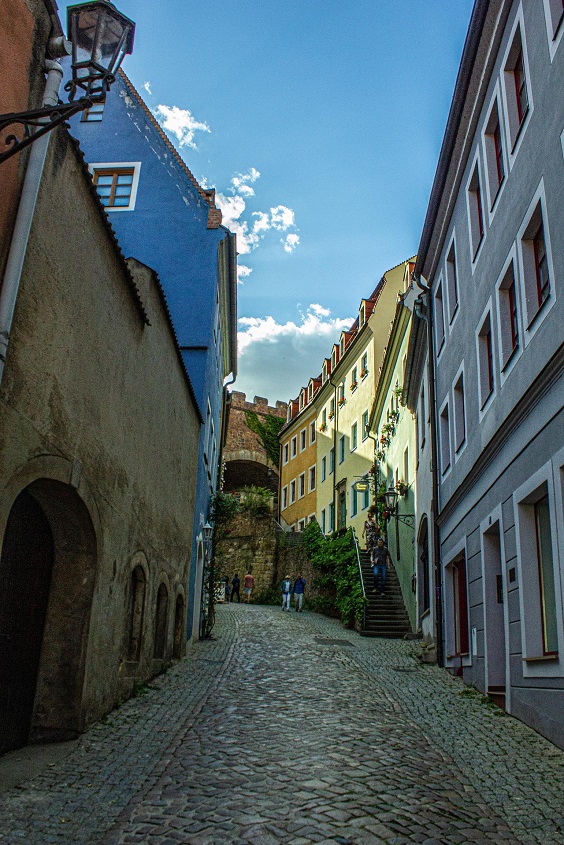
Follow one lane, glance into a courtyard, then find yourself wondering where the next flight of steps goes. That’s how I’d approach Meissen. The old town deserves more than being treated as the bit you walk through to reach the castle.
As you climb, the skyline begins to separate into individual buildings. The cathedral and Albrechtsburg stop being one impressive silhouette and become places with their own doors, histories and visiting arrangements.
At the top, the Albrechtsburg and the cathedral are separate attractions. Check their entry arrangements independently if you want to go inside both. The view from below does not require a ticket, a tour or a heroic schedule.
If steps or steep walking are a concern, ask your guide or the tourist information office about a suitable route before starting uphill. “A short walk” and “an easy walk” are not always close relatives in a medieval town.
The good china has a working life
Porcelain gives Meissen something more particular than the usual collection of pretty buildings. It’s in the shop windows, on the café tables and in figurines so intricate that picking one up looks like a responsibility. There’s a quiet pride in all that careful work. No need for a great announcement; the detail makes the point.
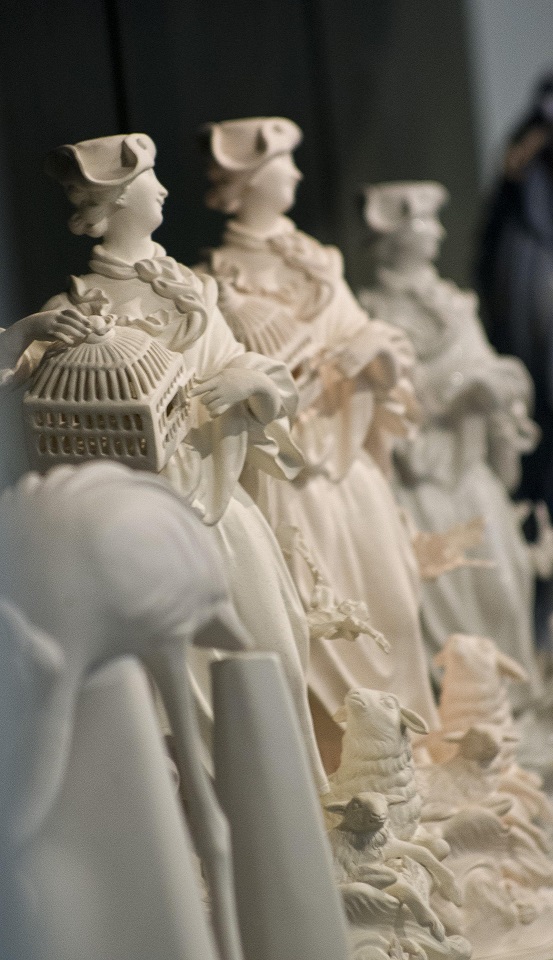
The manufactory was founded in 1710, with production initially housed in Albrechtsburg Castle. That makes the hilltop more than a scenic backdrop to the porcelain story. Production later moved out, so the castle and today’s porcelain visitor centre are different visits.
At the House of MEISSEN demonstration workshops, you can follow stages of making and decorating the porcelain. The museum adds the finished objects and their history. Watching how something is made changes the way I look at it. A tiny painted detail stops being merely decorative when you consider the steady hand required to put it there. Mine would need a considerably larger plate.
Don’t confuse the regular demonstration-workshop visit with a separate behind-the-scenes production tour. The visitor centre offers different experiences with different arrangements. Check the actual ticket description before booking.
Tempted to buy? Work out how it will get home before deciding you can’t live without it. Otherwise, the rest of the holiday may become an exercise in protecting a porcelain figure from your own socks.
When the town turns the volume down
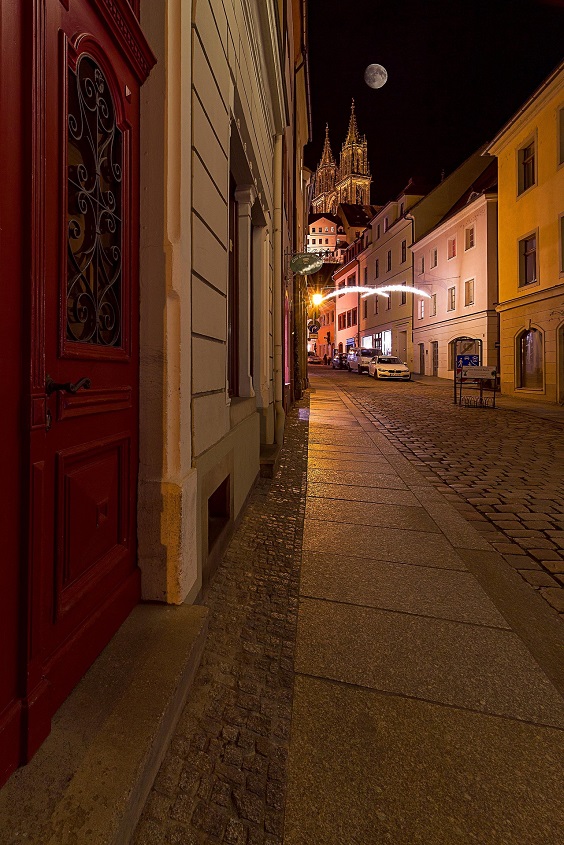
Once the day-trippers and river cruisers drift off, the evenings can feel pleasantly sleepy. That suits this place. The old centre has the sort of romantic, unhurried charm that doesn’t need much improvement beyond a little time to enjoy it.
For my money, that’s worth leaving some space in the day for. Take the lane you passed earlier, watch the light change on the buildings, or settle over a glass of local wine. No need to turn a small town into a competitive event.
The good china isn’t saved for special occasions here. It’s part of the place. Somewhere between the castle hill and the porcelain bells, Meissen makes that seem entirely reasonable.
Make Meissen a Dresden day trip—or stay
Time: Give Meissen a full day for the old centre, hilltop and porcelain visit. An overnight lets you enjoy the quieter streets after the day groups leave. Half a day is possible if you choose the old town or the workshops rather than insisting on everything.
Arrival: For a rail trip from Dresden, compare Meissen’s stations against your intended first stop. The old town, castle hill and porcelain visitor centre occupy different parts of the route; arrival in Meissen does not remove the uphill walking.
When and wine: My pick is late spring or early autumn for the lanes and views. A vineyard or wine tasting needs its own booking and opening check. Ask for a Saxon wine with lunch if that interests you; a local glass makes more sense than adding another steep walk merely to fill the afternoon.
Meissen on Viking’s Elegant Elbe
Viking’s published Elegant Elbe itinerary lists an included Meissen Walking Tour & Porcelain Manufacturing excursion. It is a useful combination: the town gives you the setting, and the porcelain visit explains why its name travelled so much farther than its size might suggest.
Follow the route and entry arrangements for your sailing. A general guide to Meissen covers more than any single included excursion, so don’t assume that castle or cathedral interiors, the bell performance or every museum are part of the programme.
For independent time, check where the ship is berthed and how you are returning before heading off. If the uphill walking concerns you, speak to the Viking team about the excursion’s actual terrain and alternatives.
Visitor information checked 8 November 2026. Playing times, entry arrangements and cruise excursions can change. Sources: Frauenkirche: porcelain carillon; church and tower; MEISSEN: manufactory history; House of MEISSEN: visitor experiences; Viking: Meissen.
Back to top ↑
What caught your attention in Meissen?
The porcelain, the hilltop view or one of those lanes that persuaded you to keep wandering?
Share your Meissen thoughts ↓