Bulgaria · Destination guide
Ruse, Veliko Tarnovo & Arbanasi: River Voices, Royal Hills and Painted Churches
Ruse and Veliko Tarnovo would give me two quite different days. One has broad squares and the Danube; the other piles its houses above a winding river and asks rather more of your legs. Arbanasi adds a quiet exterior with an extraordinary interior. The mistake would be pretending all three are a casual stroll from the same starting point.
Inland, Veliko Tarnovo stacks its houses above a twisting river, while Arbanasi keeps some of its greatest treasures behind very plain walls. I’d choose your day deliberately: exploring Ruse and taking the inland excursion are different experiences.
By Rob Wheatley · Traveller and Viking Program Director
Explore the Bulgaria destination guide →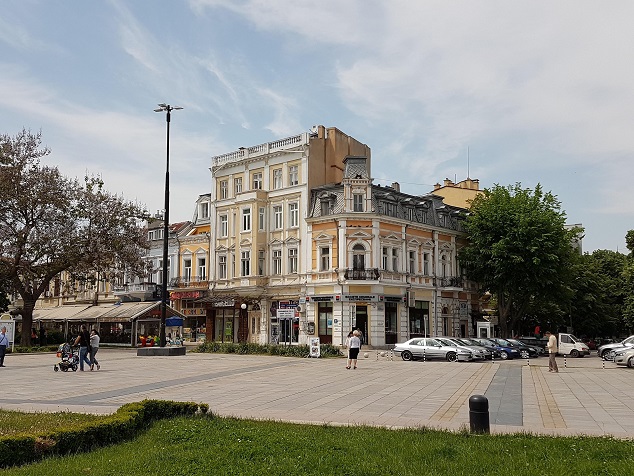
Three places, two different sorts of day
- Ruse
- The Danube city: architecture, Canetti’s story and time around the centre and riverfront.
- Veliko Tarnovo and Arbanasi
- An inland outing combining a former capital, hillside scenery and village heritage.
- Walking and access
- Expect hills and historic surfaces inland. Check the exact route, church entrances and any fortress climb.
- My practical priority
- Understand the travel time before promising yourself a full inland excursion and a leisurely day in Ruse.
Ruse: the boy who heard the world in one town
Elias Canetti was born in Ruse in 1905 and received the Nobel Prize in Literature in 1981. His childhood city, known in his writing as Rustschuk, supplied something far more interesting than a birthplace plaque.
In his memoir The Tongue Set Free, he recalls a place where different communities and languages met. Bulgarians, Turks, Greeks, Romanians, Armenians and Sephardic Jews belonged to that world. The Danube connected the town with a much wider Europe.
His account makes Ruse feel like a miniature introduction to the complexity he would encounter later. It is a lovely way to look at the city: not just façades and dates, but voices, families and people arriving from somewhere else.
I’d carry that thought into a walk around the centre. Look at the buildings, certainly, but imagine the conversations behind the windows too. A river port has always been about more than the boats.
Little Vienna, at its own pace
Ruse’s late nineteenth- and early twentieth-century architecture explains the nickname. Merchants, institutions and architects helped give the centre its confident European appearance.
Take time around the central squares and streets, then decide how much of the day belongs to the waterfront or a museum. I’d leave room for a café rather than turn the architecture into a competition to identify every style before lunch.
If you want to follow the Canetti connection, ask the visitor information service which associated sites are currently accessible. A historic family building and an open house museum are not automatically the same thing.
For an independent visit, check the walk from your actual arrival point. For a cruise stop, confirm the berth and any ship movements before assuming that the return journey will end where you began.
Veliko Tarnovo: the saint who changed sides
In 1185, the brothers Peter and Asen were preparing a rebellion against Byzantine rule. Military organisation mattered, but so did convincing people that the cause had powerful support.
Accounts of the uprising describe the claim that St. Demetrius had abandoned Thessaloniki and the Byzantines and come to help the rebels. A church dedicated to him became central to proclaiming their cause. Medieval politics had acquired a very impressive endorsement.
That is a story about how divine backing was claimed, not proof of a saint changing his address. The rebellion led to the restoration of Bulgarian statehood, with Tarnovo becoming the capital of the Second Bulgarian Empire.
Climb through Tsarevets and consider the strength of the message. A saint on your side was rather more persuasive than a promising campaign leaflet.
Tsarevets and the city above the river
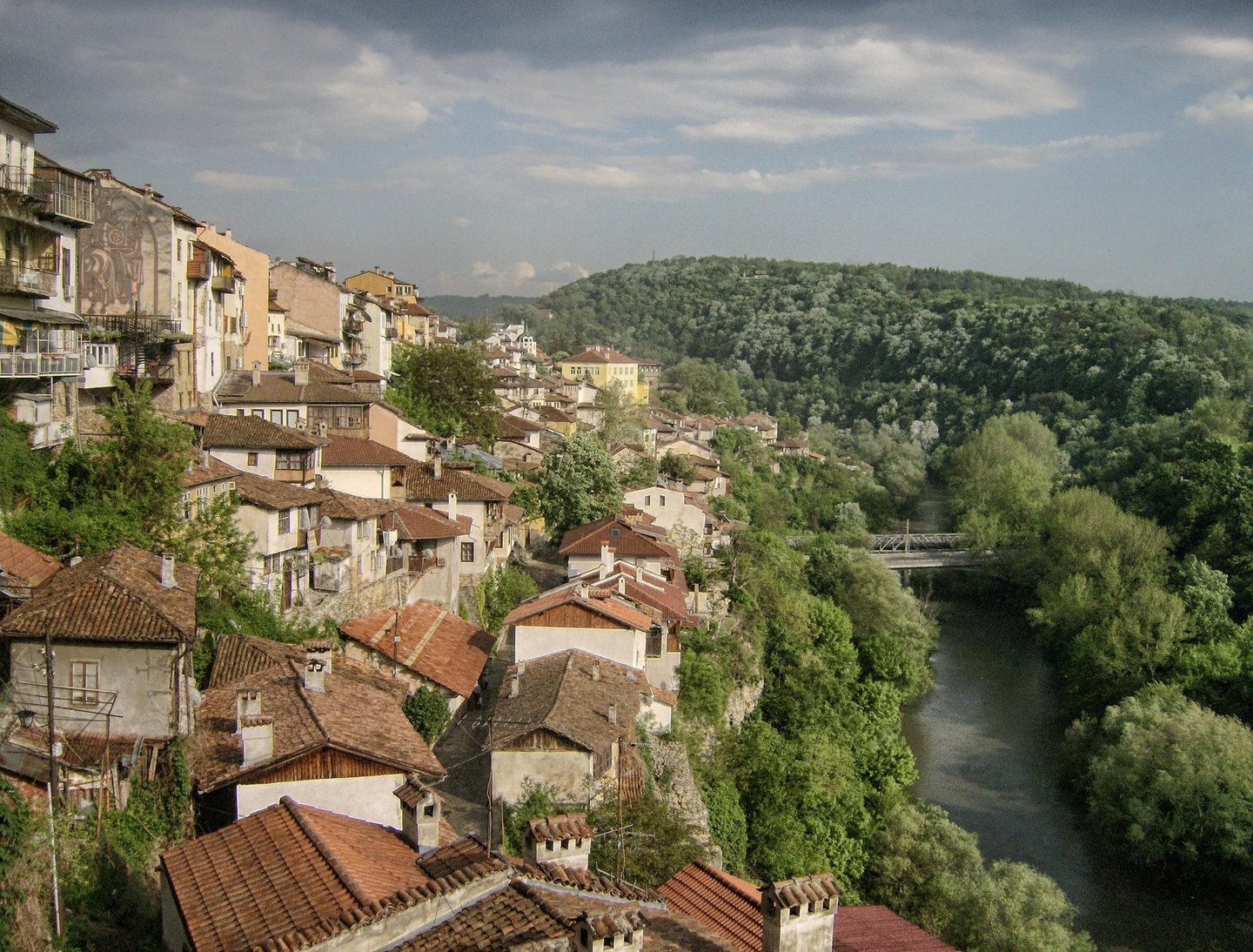
Veliko Tarnovo is built around bends in the Yantra, with houses stacked up the slopes as if trying to see over one another’s shoulders. The setting is part of the attraction, and part of the effort.
Tsarevets was the principal fortified centre of the medieval capital. Today, the hill and surviving remains need time and a willingness to walk. Check what your visit actually includes: a view of the fortress is different from entry, and entry is different from a climb to the top.
I’d choose shoes for the ground rather than the photograph. Ask about steep sections, steps and places to wait if only part of your group wants the full climb. There is plenty to appreciate without pretending everyone enjoys an uphill afternoon equally.
Arbanasi: the church that looked like a barn
Arbanasi is the village where stone walls and heavy doors reveal very little from the street. The houses can look defensive and the churches surprisingly modest. Appearances are not a reliable guide to what is inside.
The Church of the Nativity makes the point beautifully. Its restrained exterior gives little warning of the painted interior. Built and decorated in stages, it preserves wall paintings whose earliest layer dates to the late sixteenth century.
The museum highlights scenes including the Tree of Jesse and the Wheel of Life. Rather than try to absorb every figure at once, let a guide explain a few details, then look again. A painted wall becomes much more interesting when you know what it is telling you.
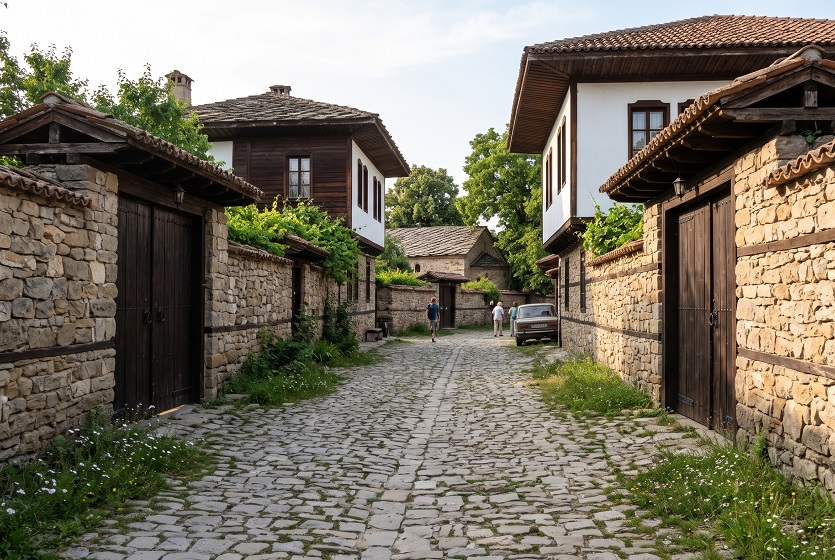
The contrast is the hook: plain outside, extraordinary within. The church belongs to the Ottoman-period history of the village, but its appearance should not be reduced to one simple rule applied everywhere and at all times. Both the building and its decoration have a history of their own.
Make the inland outing work for you
Veliko Tarnovo and Arbanasi are separate places from Ruse. Allow for the coach or car journey, stops, visiting time and the return. If you are booking independently, confirm admissions and transport before fitting anything around a ship’s departure.
For the Nativity Church, check current visiting arrangements, talk bookings and photography rules. Church interiors may have restrictions designed to protect the paintings. Follow the instructions rather than assume a camera ticket or flash photography is allowed.
I’d decide whether the day’s appeal is the historical story, the church interior or the hilltop visit, then check that your chosen tour delivers it. Two excursions using the same town name can spend their time quite differently.
Choose a base before choosing every sight
How long: Give Ruse a day of its own. For Veliko Tarnovo and Arbanasi, allow a full inland day with arranged transport—or stay in Veliko Tarnovo for a less rushed visit. Public transport between cities does not necessarily solve the last leg to a hilltop village or fortress entrance.
When: I’d favour spring or early autumn for Tsarevets and the sloping streets. Summer heat makes an early start useful. Confirm church and museum openings before the inland trip; a picturesque exterior is not a substitute if the painted interior is your main reason for going.
A Bulgarian pause: Try banitsa for a quick pastry stop, or give a local restaurant time to introduce a regional menu. A longer lunch works better in a self-planned overnight stay than as a hopeful extra on a tightly timed transfer day.
For river cruise guests
Visiting with Viking?
Included programme: Viking’s published 2027 Passage to Eastern Europe itinerary lists Veliko Tarnovo & Arbanasi as a full-day excursion from the Ruse call. This is not simply a walking introduction to Ruse itself.
Optional, at additional cost: the published programme also lists Ivanovo Rock-Hewn Churches & Basarbovo Monastery. That outing has a different focus and its own terrain and access considerations.
Check the actual excursion description for interiors, fortress entry, lunch, coach time and walking grade. Do not assume Tsarevets or the Nativity Church is included merely because the town or village appears in the title.
If you prefer to explore Ruse, discuss the day’s ship movements and independent options with the onboard team. Confirm where to rejoin and the all-aboard time before setting out.
Checked against Viking’s published 2027 programme on 7 November 2026. Your booked sailing confirms availability, inclusions and timing. I work for Viking; this is my own practical guidance.
Explore Passage to Eastern Europe →Explore more along the lower Danube
Planning sources
History and visitor information checked 7 November 2026. The saint’s support is presented as a claim made in the uprising narrative. Confirm opening arrangements and your sailing’s daily programme.
- Nobel Prize: Elias Canetti’s life and award
- Jewish Museum Hohenems: Canetti’s recollection of multilingual Rustschuk
- Ruse municipality visitor guide
- Historical research: St. Demetrius and the uprising of Peter and Asen
- Regional museum: St. Demetrius Church
- Bulgarian Ministry of Tourism: Tsarevets
- Regional museum: Nativity Church history and visitor arrangements
- Viking: Ruse programme
Which side of the day appeals to you?
Ruse’s streets and riverfront, Veliko Tarnovo’s hills or Arbanasi’s painted church? Share your recommendation or ask about choosing an excursion.
Join the conversation below ↓