From Rob’s notebooks · Crete, Greece
Willow and the Ghosts of Crete
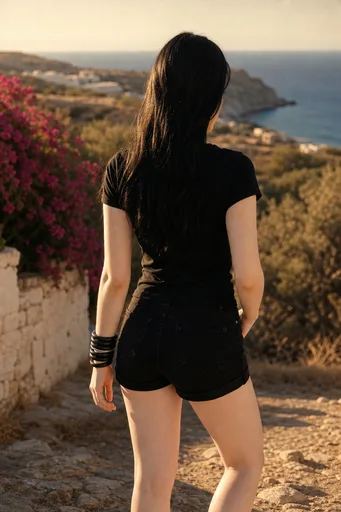
The woman I fell for in Crete had a remarkable talent for finding dead people. Ancient tombs, abandoned villages, an island of graves. Other couples went looking for a nice beach. We had a Fiat 500 Cabriolet and apparently some unfinished business with the departed.
I met her at a hostel. She called herself Willow, kept to herself and initially seemed to regard my attempts at conversation as a minor security threat.
Naturally, I was intrigued.
I later discovered her name was Jennifer, but Willow suited her. Certainly not a weeping one. More that wispy quality you get when the wind moves through the trees.
This was Crete in August, and the Greek heat was a sweaty, stinging business. Dark jeans had given way to denim shorts, but Willow seemed otherwise untouched by the general holiday mood. She would leave before the rest of us had settled in for breakfast. Where she went, nobody seemed to know.
Some found her unfriendly. I found her fascinating, which probably tells you as much about me as it does about her.
My first attempts at conversation went badly. Her one-word replies were doors slamming shut. Still, I persisted.
Then, quite by accident, I found something we could talk about.
A conversation after dark
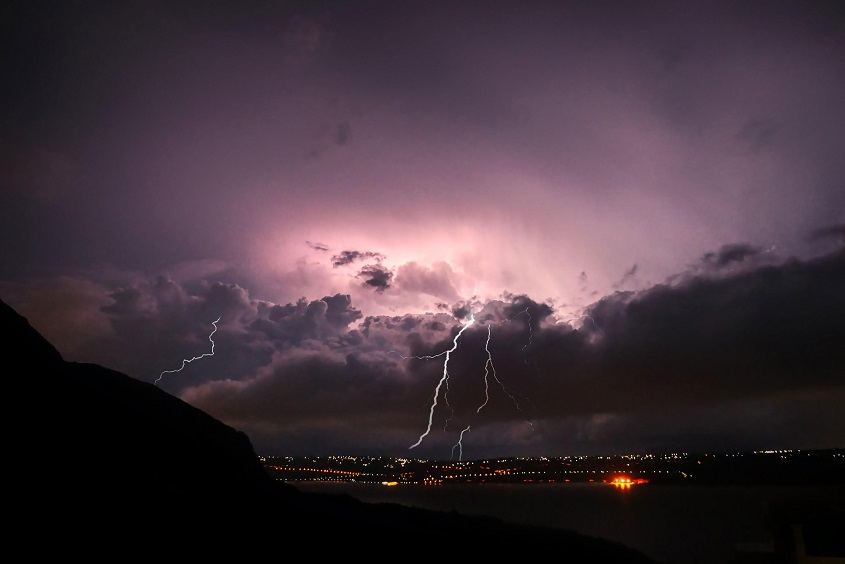
Another member of our group was a Lebanese guy named Willy. A hostel is a bit like the French Foreign Legion: new identities, ask no questions. We were discussing films, and I mentioned that I’d seen The Bride and rather liked it.
Later that evening, I was sitting beside the pool under a warm Cretan sky when a voice came out of the darkness.
“So you liked The Bride?”
Willow.
She stepped into view, her long black hair catching the light.
“I enjoyed it,” I said, mildly astonished that we had progressed to a complete sentence.
Before long, we got chatting. Films led to music, music led to everything else, and somewhere along the way we stopped being two people making conversation and became two people reluctant to end one.
At some point she slipped out of her clothes and into the pool. I remember the grace of it. I also remember trying to appear considerably less distracted than I was.
“You’re always taking notes and photos,” she said later, over another glass of white wine. Apparently, this had counted against me, although I hadn’t realised it.
Fair enough. I do both. I keep a journal because I’m living a life I don’t want to forget. However, it hadn’t occurred to me that, from the outside, this might look less like enthusiasm and more like surveillance.
We talked about first impressions, then life, loves and sorrow in roughly equal helpings. Eventually, the sky began to lighten.
By the time we went back to our respective rooms, breakfast was becoming a possibility. We slept through it and met again at four in the afternoon for something that could only generously be called brunch.
Crete, Willow style
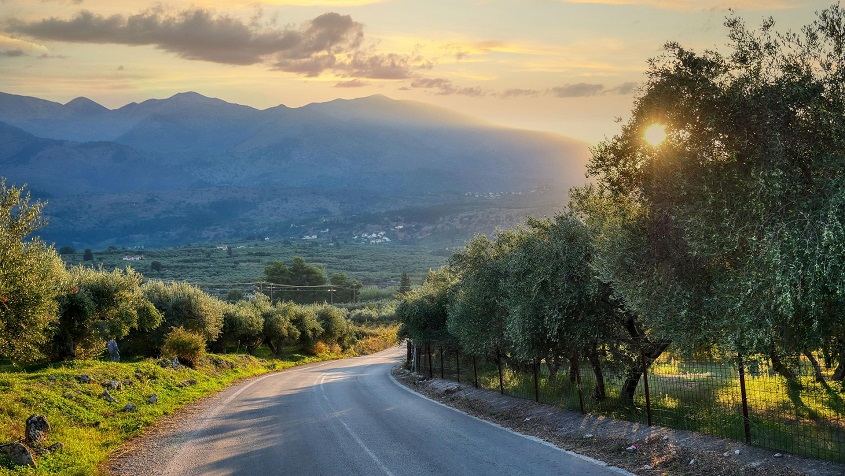
For the next whirlwind week, we were rarely apart. Somewhere between that first night by the pool and the early starts that followed, we became more than travelling companions. The details can stay between us.
Crete had fascinated her for years. She’d spent a summer there with her family when she was seven and had returned a few times since. Her grandmother was Greek, and Willow remembered the stories she’d told her. However, I couldn’t always tell which details came from those stories and which she’d picked up on her own visits. Either way, I was about to get a rather different tour of the island.
Willow set the rules over iced coffee and a hangover. No buses. No guides. We would leave early.
We travelled in a 2014 Fiat 500C Cabriolet. A small Italian car, a large Greek island and a woman whose preferred sightseeing involved quite a lot of dead people.
I agreed with suspicious speed.
Spinalonga: somebody had to sing
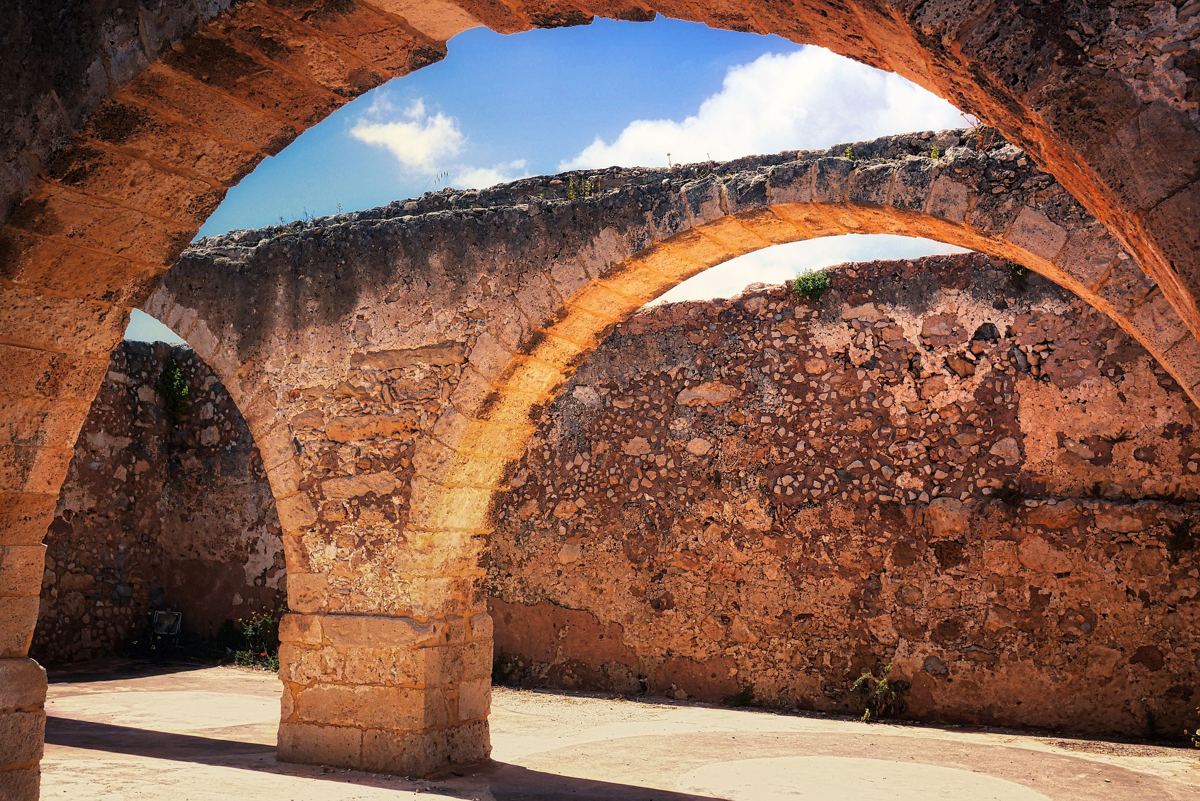
Our first outing was Spinalonga. From Elounda, a boat carried us across water the colour of bottle glass towards the fortress island.
The wind kept blowing her hair across my notebook until I stopped trying to write.
“You’re slipping,” she said.
“Some things you keep.”
Inside the walls, she told me about the island’s years as a leprosy colony. From 1903 until 1957, people had been sent here to live apart from the world they knew. The entrance tunnel was known as Dante’s Gate.
Then she pointed towards the church.
When the colony closed and the remaining patients were transferred to Athens, the priest stayed. Five more years, tending to the religious observances for those buried on the island.
“Somebody had to sing for them,” she said.
For some reason, that stayed with me longer than the dates.
Afterward, we walked through the old settlement. I took notes again. She didn’t object.
Matala: the dead make room
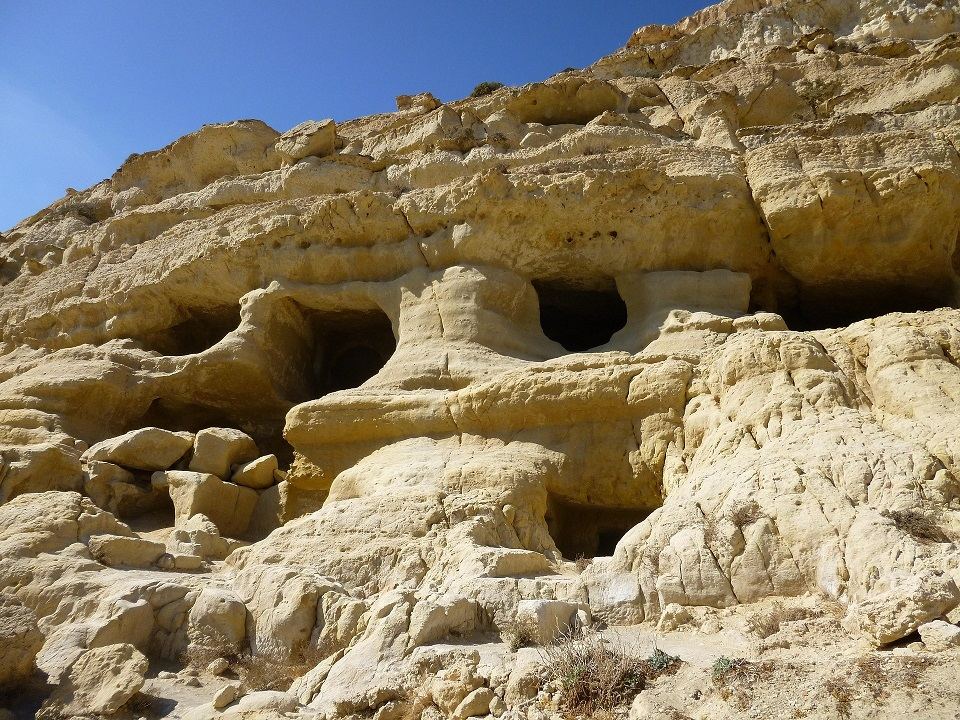
Matala brought us back into the sunshine.
The cliffside caves had served as tombs long before the hippies arrived and found another use for them. Joni Mitchell had stayed in Matala, and the place found its way into “Carey.”
“The Romans put their dead in the cliff,” Willow said, “and the hippies moved in and made it a party. This island has never once wasted real estate.”
Besides, I liked her humour. It tended to arrive without warning, and she rarely waited to see whether I’d caught it.
At dusk she swam beneath the caves. Later, she fell asleep against a tomb’s doorframe with the last light in her hair.
I sat closer than I needed to, guarding her sleep from absolutely nothing.
The silence at Melidoni
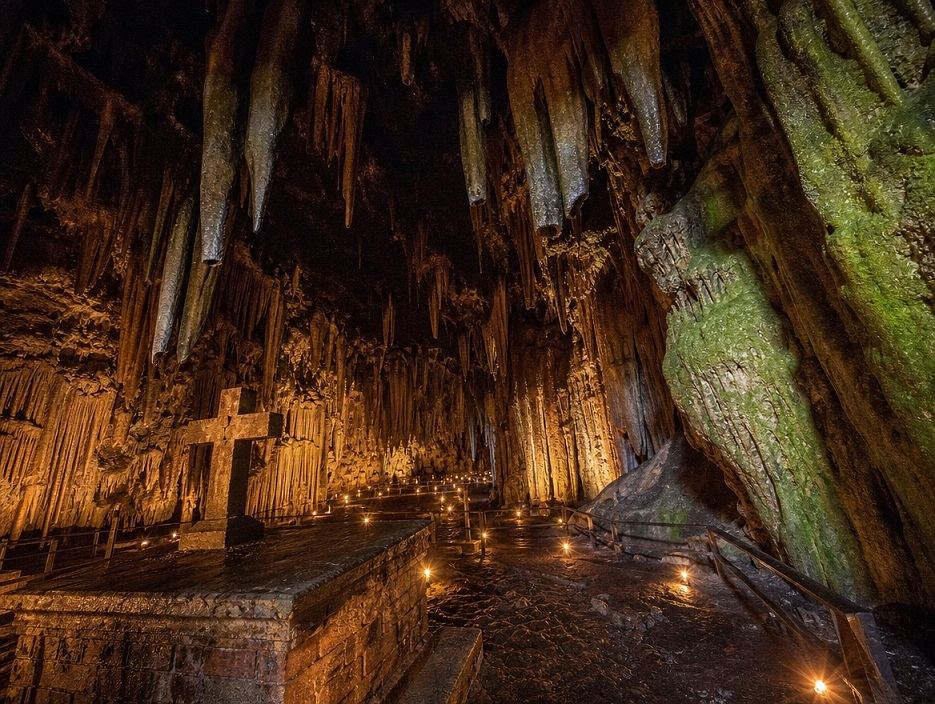
Melidoni was different.
In the cave’s main chamber stood an ossuary containing the remains of people who had taken refuge there during the struggle against Ottoman rule. In January 1824, after a siege, Ottoman troops lit fires at the entrance. Those inside suffocated.
Willow spoke quietly. This time, there was none of her usual wit.
She looked at my camera.
“You don’t photograph this one.”
I put it away.
On the way out, her hand caught my cuff. A brief touch in the dark passage, gone before we reached the light.
Neither of us mentioned it.
We also wandered among the rock-cut tombs at Armeni, where she recovered her humour.
“A city of the dead with better urban planning than any of the living ones.”
She led me between the entrances like a landlady showing off available units.
Somewhere among those graves, she told me her name was Jennifer. She preferred Willow. By then, so did I.
Some things you keep
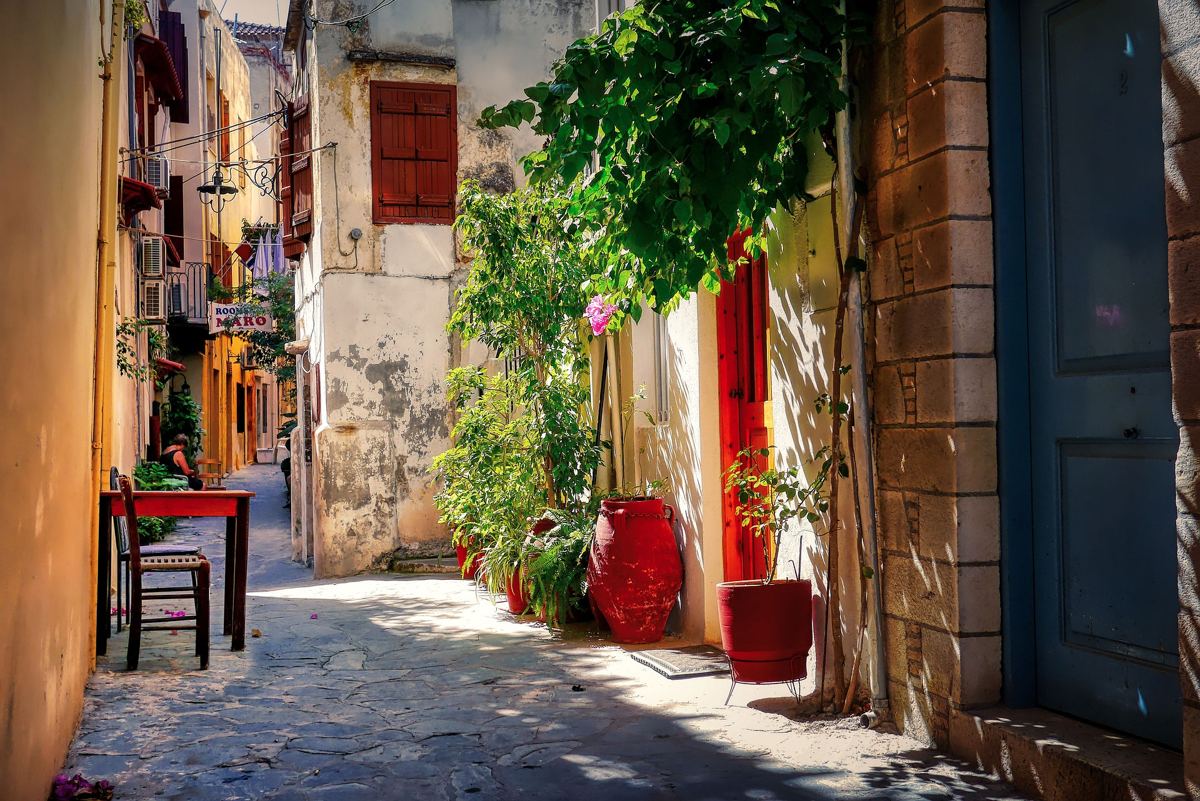
On the seventh day, we did very little.
We swam, ate and drank white wine. There was no cave to reach, no fortress to investigate and nobody’s tragic history to discuss. By then, we could sit together without having to fill every silence.
When the others asked why I kept missing the morning bus, I said I’d been sleeping badly.
Which was true enough.
The next morning, she left before the rest of us had settled in for breakfast, the way she always had.
I’d left my notebook on a chair beside the pool. When I picked it up, it was open at a sentence I hadn’t finished.
Underneath, in handwriting I hadn’t seen before, she had added a single line.
Some things you keep