TRAVEL FIELD NOTES · TRAVEL TIPS & GUIDES
Train Travel in Europe: My Unlikely Rail Renaissance
Train travel in Europe can turn a transfer into part of the holiday—provided you choose the right ticket, route and sleeping arrangements. After an unfortunate teenage introduction, I’ve learned to appreciate rail. Here’s how to compare passes, book a comfortable sleeper and choose scenic journeys worth your time.
By Rob Wheatley – Program Director & traveler
24 October 2026
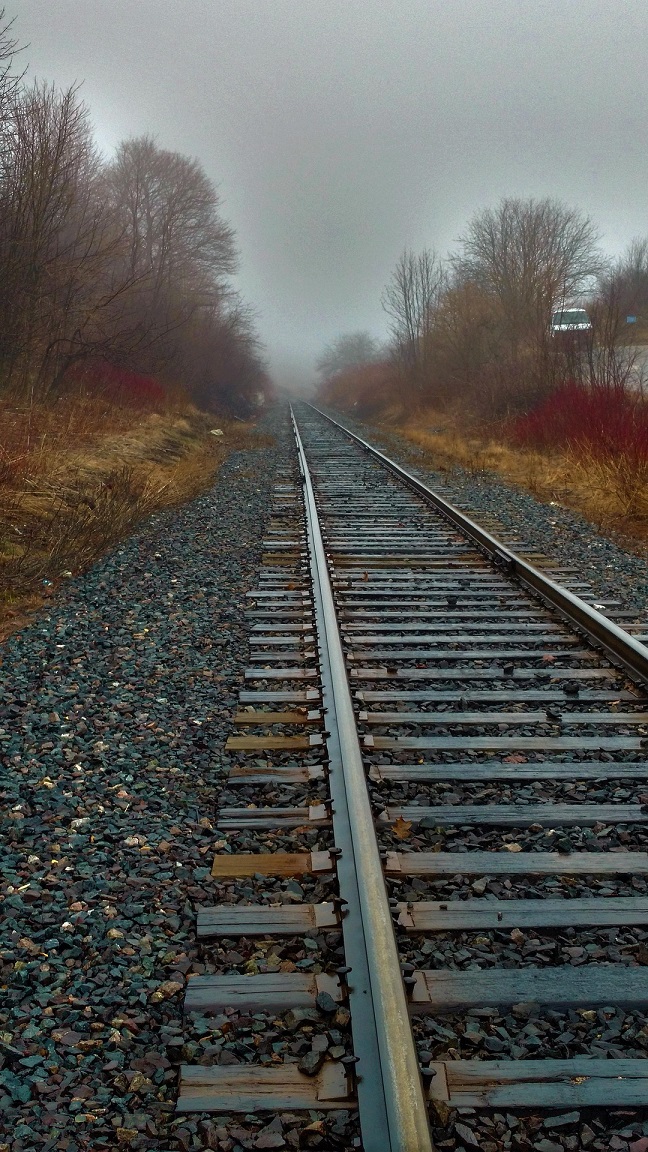
My first overnight train came with an unexpected shower
I have to admit, trains never really turned me on.
As a child, I had a tall, skinny friend called Steven who claimed to own a model railway that filled an entire room. Later, I discovered it belonged to his dad. Such a liar.
At eight, I found this miniature world fascinating. However, by the fourth visit, I’d seen enough.
I was into planes. Not trains.
Then, at sixteen, two friends and I took an overnight train from Johannesburg to Durban. We had a four-berth compartment, which meant one spare place. Naturally, somebody filled it.
Our unexpected companion was a grumpy older gentleman with the personality of a flying brick.
So much for the party.
A berth I would rather forget
Instead, we relocated our festivities to a forbidden corner at the far end of the train. For two glorious hours, it worked. Then a conductor found us and brought the operation to an end.
Back in the compartment, Mr. Personality was asleep on the upper bunk. Unfortunately, he was also dribbling onto my bunk below.
That rather damp encounter did little for my enthusiasm.
In more recent years, however, I’ve enjoyed plenty of train journeys, both overnight and during the day. A dining car helps. Better still, give me a compartment for my partner and me, with our own bathroom.
Suddenly, rail travel becomes a different proposition.
Perhaps I haven’t become a railway enthusiast. Nevertheless, I have become rather interested in arriving somewhere without first spending several hours negotiating an airport.
The rail renaissance: what actually matters to you
Train travel in Europe now offers a tempting mix of city connections, overnight services and journeys you take mainly for the view. However, the useful question isn’t whether rail is fashionable. It’s whether a particular train improves your particular trip.
For example, a daytime service may deliver you close to the center of your destination. A sleeper can combine transport with a night’s accommodation. Meanwhile, a scenic train turns the journey itself into something worth making time for.
Those are three different purchases. Consequently, they deserve three different comparisons.
There is an environmental benefit to consider, too. Rail can have substantially lower emissions than flying, although the difference depends on the route, energy supply and comparison method. Check Eurostar’s published comparisons rather than applying one percentage to every train on the planet.
My advice? Begin with the experience you want. Then work out which ticket buys it.
First, choose the kind of train trip
| Your priority | Start with | Check before paying |
|---|---|---|
| Get between cities efficiently | A direct daytime train | Door-to-door time, station location and fare restrictions |
| Travel overnight | A couchette or sleeper | Whether you’re buying a seat, a berth or a private compartment |
| Enjoy the landscape | A scenic daytime route | Daylight, weather, reservation charges and regional alternatives |
| Make the train the holiday | A luxury rail journey | Total package price, cabin, meals, excursions and nights included |
For a first attempt, I’d choose one straightforward journey between places you already want to visit. After all, a direct train with a sensible arrival time is a gentler introduction than an itinerary requiring five changes and the sprinting ability of a gazelle.
Alternatively, try a scenic day trip before committing to a week on rails. You’ll discover whether the passing landscape delights you—or whether you begin checking your phone after the third field.
Sleeper trains: book the bed you actually want
The phrase “night train” describes the timetable. Unfortunately, it doesn’t tell you what you’ll sleep on.
For instance, a cheap fare may buy an ordinary seat. A couchette is a simpler bunk, often in a shared compartment. Meanwhile, a sleeper usually offers a made-up bed and more comfort, although privacy and bathrooms still depend on the booking.
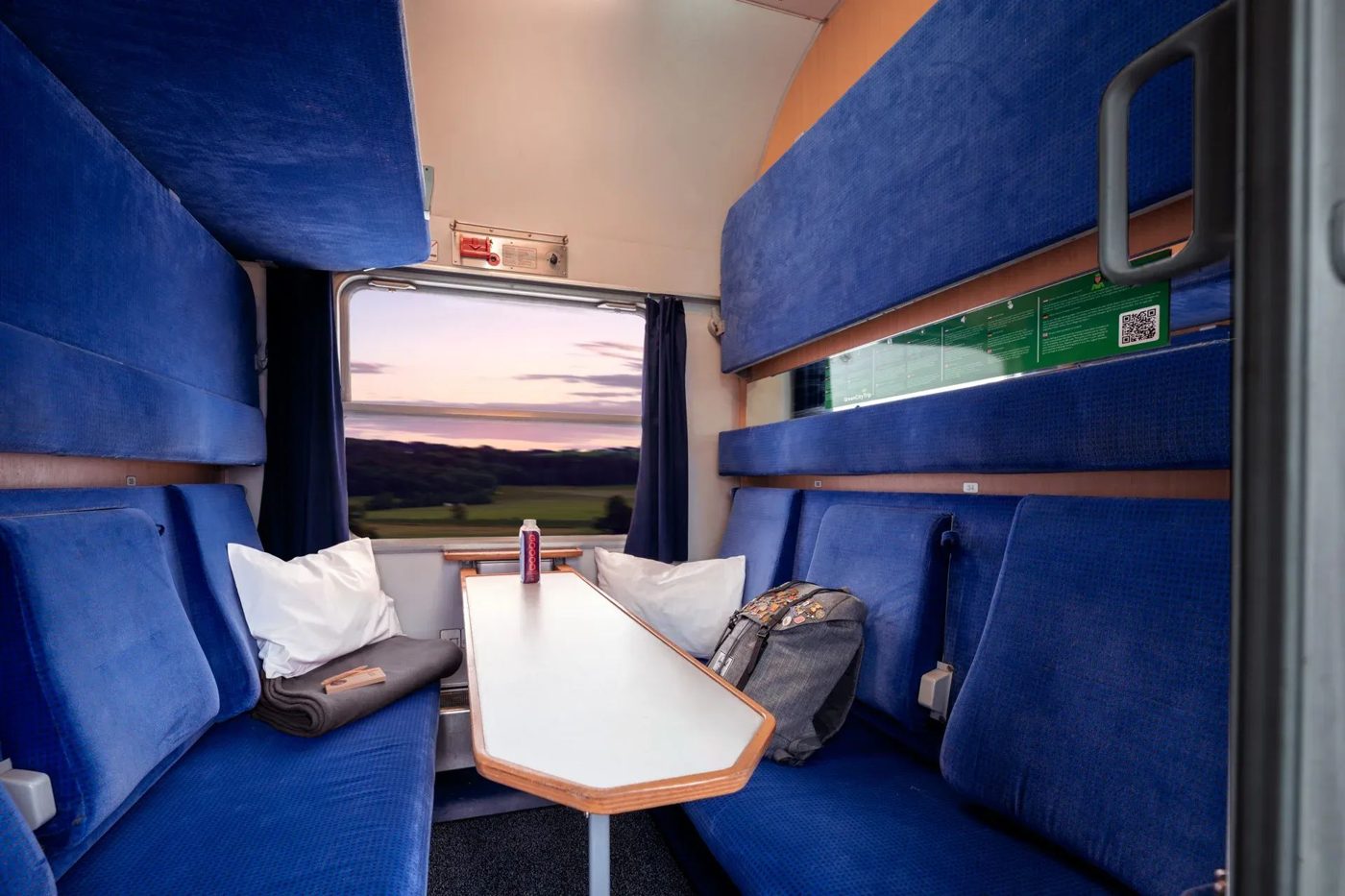
A shared couchette compartment: perfectly useful for some travelers, but a very different purchase from a private sleeper.
| Accommodation | What you’re choosing | The important question |
|---|---|---|
| Seat | Seated overnight travel | Will you actually sleep well enough? |
| Shared couchette | A bunk among other passengers | How many berths, and where are the toilets? |
| Shared sleeper | A bed with greater comfort | Who shares, and what facilities are included? |
| Private compartment | Exclusive use of the booked space | Is the bathroom private or shared? |
As an example, Nightjet’s sleeper categories include compartments for one, two or three people, with private shower-and-toilet options available. However, that doesn’t make every sleeper compartment en-suite.
Before booking, check the exact category, upper-bunk access, luggage space and whether the price is per person or for the whole compartment. If climbing a ladder at 2 a.m. sounds unappealing, request a suitable lower berth and confirm it.
Likewise, arrange mobility assistance with the operator before committing. A station lift doesn’t guarantee that every train doorway, corridor or sleeping compartment will work for you.
Does a sleeper train really save money?
Sometimes. However, “it saves a hotel night” is only half the calculation.
Compare the total sleeper fare with the daytime journey plus the hotel you would otherwise use. Then add meals, transfers and any reservation charges.
For example, imagine a daytime ticket costs €70 and a hotel costs €140. Together, that’s €210. If a private sleeper for the same number of people costs €280, you’re paying €70 more for that particular experience. These are illustrative figures, not quoted fares.
On the other hand, the overnight option might preserve a valuable sightseeing day. That can justify the extra cost, provided you’re likely to sleep.
Also check the arrival time. Reaching a city at 6 a.m. sounds efficient until your room is unavailable until the afternoon. Therefore, plan luggage storage, breakfast and a gentle first morning.
I would avoid putting a once-in-a-lifetime tour immediately after a night when sleep is uncertain. Romance is lovely. Exhaustion is a less charming traveling companion.
Rail pass or individual tickets? Do the sums first
A pass can be useful, particularly when you want several longer journeys or flexibility. However, it isn’t automatically the cheapest option.
For a fixed itinerary, start by pricing the actual trains on your dates. Then compare that total with the pass plus compulsory reservations and sleeper supplements.
| Your plan | Worth comparing first | Why |
|---|---|---|
| Two or three fixed journeys | Individual tickets | Advance fares may undercut a pass |
| Several longer journeys with changing plans | A rail pass | Flexibility may justify the cost |
| Mostly short regional rides | Local tickets or regional offers | A pass day may cost more than the journeys |
| Premium scenic trains or sleepers | The complete fare breakdown | A pass may cover transport but leave supplements to pay |
For most US residents, Eurail is the relevant European pass family; European residents generally use Interrail. Eligibility follows residence rules, so check yours before buying.
Crucially, a pass isn’t a reservation. Some trains have limited places for passholders, and overnight accommodation costs extra. Read Eurail’s reservation guidance before assuming that a flexible pass means any train, anytime.
On a direct overnight journey, the pass travel-day rules can also matter. Therefore, check the current rule for your precise connection, especially if you change trains after midnight.
Scenic train journeys worth building around
You don’t need to collect every famous train. Instead, choose a journey that fits the places, season and budget you already have in mind.
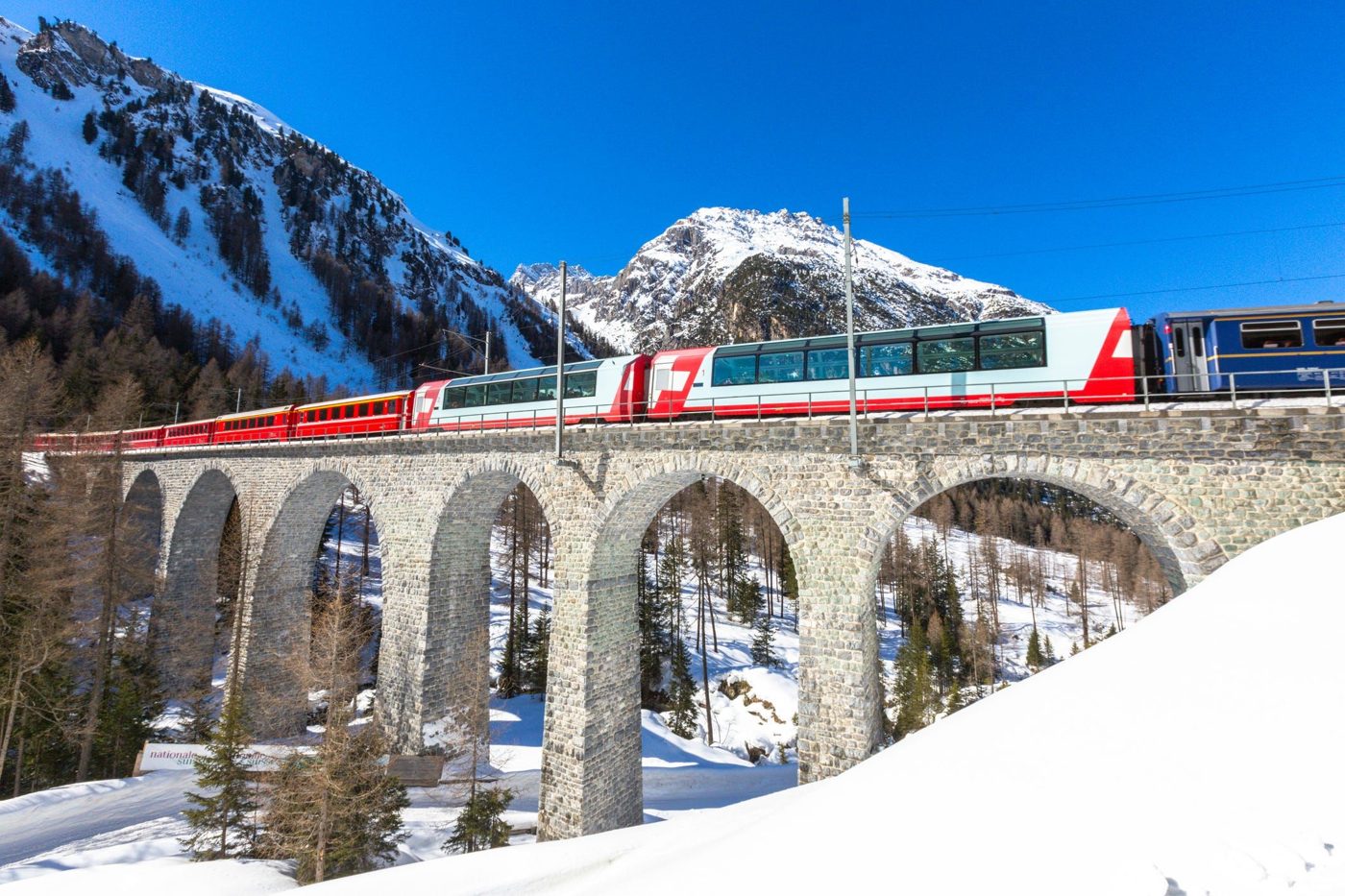
Panoramic Alpine rail travel: choose the route first, then decide whether the premium carriage is worth the extra cost.
Switzerland: Glacier Express
If you want a full day of panoramic rail travel, consider the Glacier Express between Zermatt and St. Moritz. However, book it as a substantial part of the day rather than a quick transfer.
The operator requires both a valid ticket and a seat reservation. A qualifying pass may cover the ticket element, but the compulsory reservation is separate. Check the official booking rules before buying a pass on the assumption that everything is included.
Switzerland to Italy: the Bernina route
The Bernina journey appeals if you want dramatic Alpine scenery on the way toward Tirano. However, there are different ways to ride the line.
The panoramic Bernina Express and regional services share the relevant tracks, but their seating, stops and reservations differ. Consequently, compare them before paying for the famous name. Rhaetian Railway explains the alternatives, including reservation arrangements.
Portugal: the Douro line
For a more ordinary train doing an extraordinary scenic job, look at Portugal’s Douro line toward Régua, Pinhão and Pocinho.
Rather than defaulting to the furthest endpoint, choose a stop that leaves time to enjoy the place and return comfortably. Then check CP’s current service information for timetables and replacement buses. Engineering work can change the experience considerably.
If Porto is your base, my Porto guide is a useful place to start.
Britain: London to the Scottish Highlands
The Caledonian Sleeper offers an overnight approach to Scotland, including the Fort William service from London Euston. For this kind of journey, the attraction is partly what happens after you wake up.
However, choose dates and direction with daylight in mind if scenery is the priority. Also check the room category and current timetable rather than assuming that every departure gives the same experience.
Europe’s night-train map is useful—but dates come first
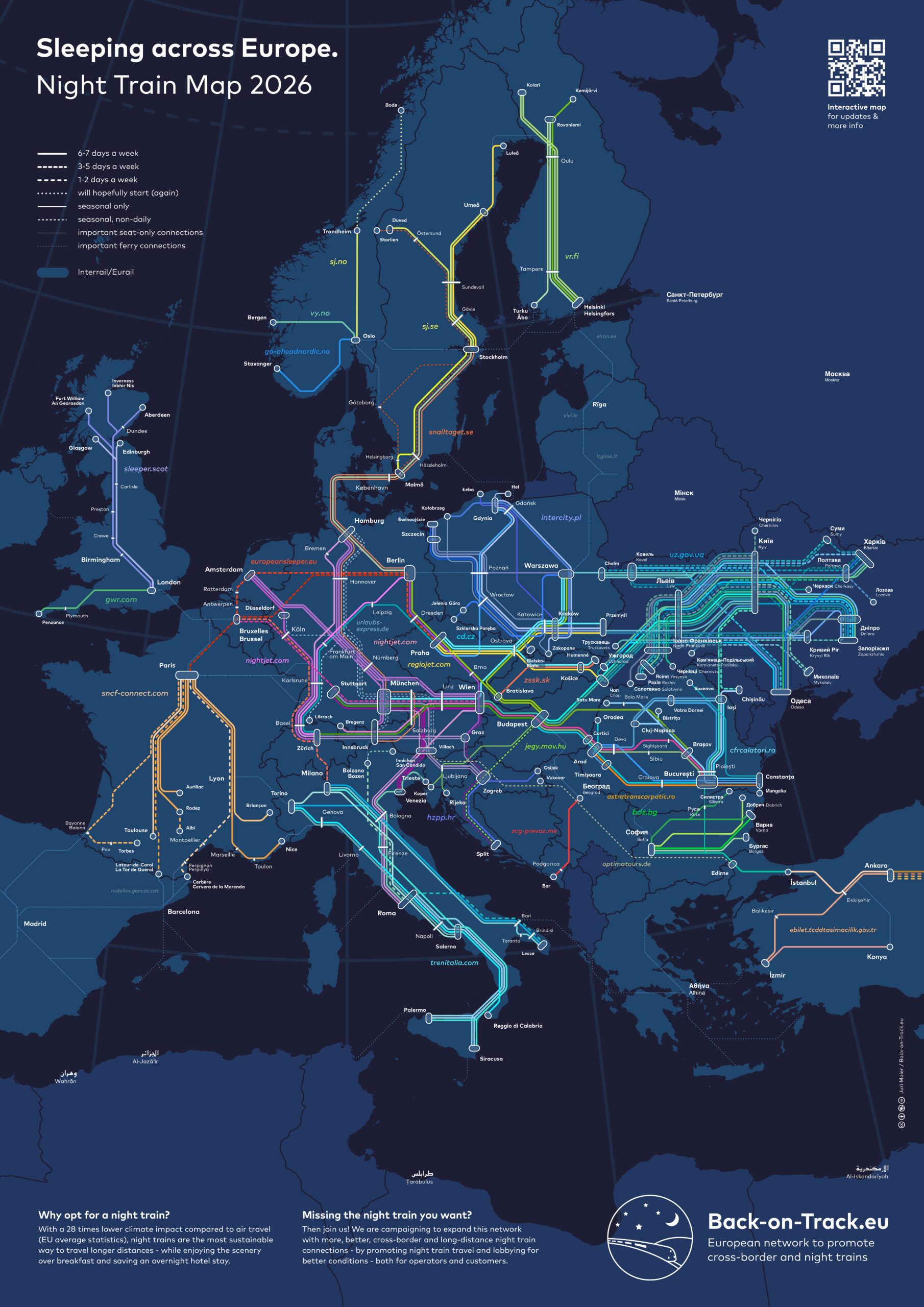
Map: © Juri Maier / Back-on-Track.eu, reproduced unmodified under its stated Creative Commons permission. Open full-resolution map in a new tab ↗ — click again there to zoom and scroll. Consult the live map and operator for current services.
For inspiration, the Back-on-Track night-train map helps you see possible overnight connections. However, a line on a map is only the beginning.
Next, verify the departure date, direction, station and accommodation with the operator. Routes can run only on selected days, while engineering work may alter stops or timings.
For example, European Sleeper currently lists routes linking Paris and Berlin, Brussels and Prague, and Brussels and Milan. Check the live timetable rather than treating a launch announcement as a permanent promise.
My booking order would be simple: secure the sleeper or scenic departure that matters most, then fit the surrounding hotels and easier rail legs around it.
When the train becomes the whole holiday
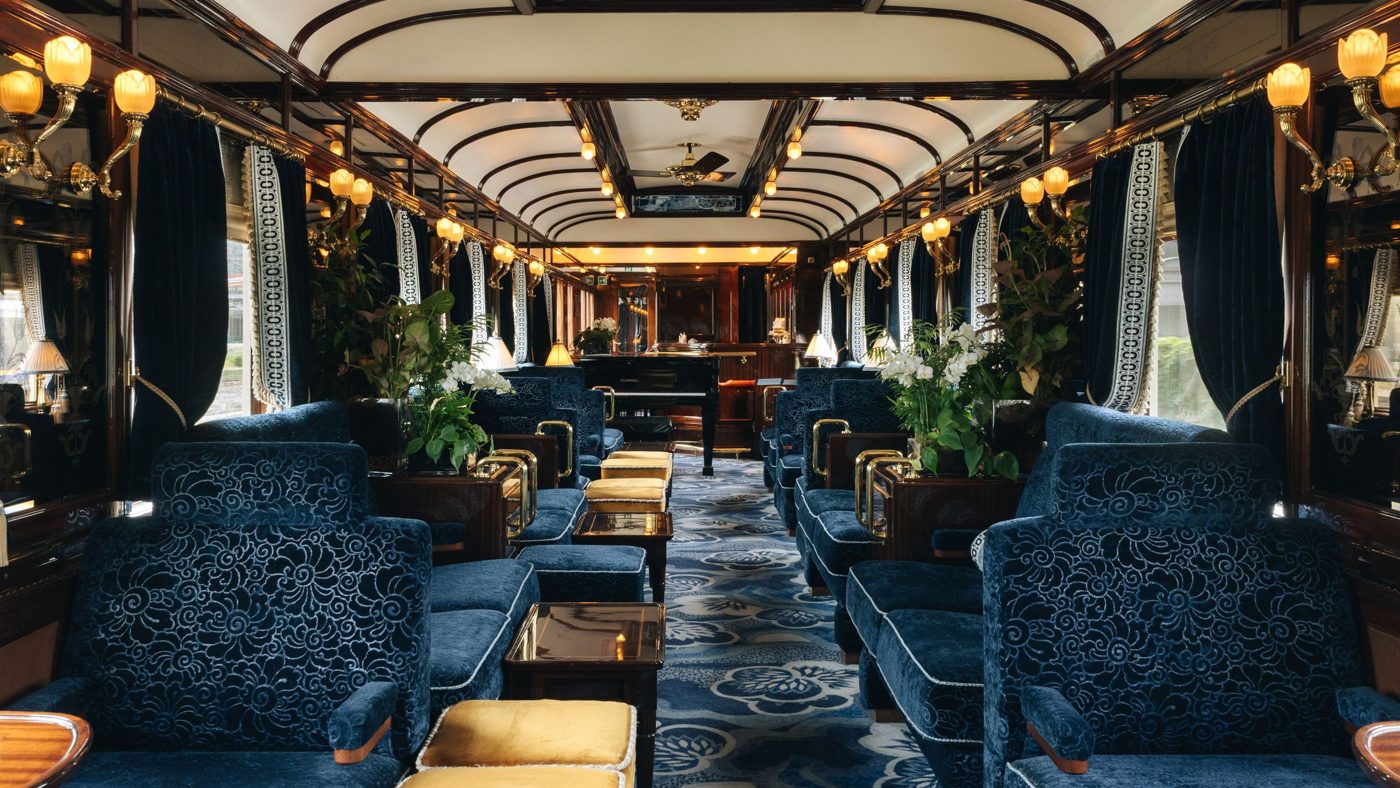
At the luxury end, the accommodation, dining and onboard atmosphere become part of what you’re paying for.
Beyond ordinary tickets and sleepers, luxury rail is a different kind of purchase. Instead of comparing it with a cheap flight, compare it with a multi-day holiday.
For example, The Ghan offers journeys through Australia’s interior between Adelaide and Darwin. Different itineraries have different durations, so read the inclusions rather than assuming every departure is identical.
Similarly, the Venice Simplon-Orient-Express sells a distinctive luxury experience. A restored carriage, steward service and included dining belong in the value calculation.
Before paying, compare cabin facilities, meals, drinks, excursions, transfers, gratuities and cancellation terms. Also ask how much of the journey happens in daylight.
After all, the view you’ve paid to admire is less impressive when it’s completely dark.
How I’d plan a first rail holiday
- Choose two or three places you genuinely want to visit. Then connect them sensibly rather than adding cities simply because the railway reaches them.
- Price the key journeys for your actual dates. Compare operator tickets with a suitable pass, including reservations and accommodation.
- Secure the hard-to-replace leg first. For example, that might be a private sleeper or a particular scenic departure.
- Leave breathing room around connections. In particular, check whether tickets form a through journey or separate contracts, and what happens if the first train is late.
- Check the exact stations and arrival plan. Large cities can have several terminals. Also allow time for luggage storage or hotel check-in.
- Pack for carrying, lifting and a night in a small space. Keep documents, overnight essentials, a charger and earplugs within reach.
- Recheck service notices before departure. Finally, save tickets offline and know where to seek help if the plan changes.
For the wider planning habits, see my Travel Logistics & Transit guide. Meanwhile, Slow Travel explains how fewer moves can make the whole trip more enjoyable.
Questions before you book
Sometimes, although you need to compare the whole journey. Include station or airport transfers, luggage charges, reservations and any hotel night affected. For fixed dates, compare the available fares before choosing a pass.
No. Private use of a compartment and a private bathroom are separate features. Therefore, check the exact accommodation category, facilities and booking confirmation.
No. You need a valid ticket or accepted travel pass, plus the compulsory reservation. Therefore, compare the total cost of the journey with your wider Swiss itinerary before buying a pass.
Booking windows vary by operator and service. Start checking early if a particular departure or private cabin matters. However, an unavailable date may mean sales haven’t opened yet, rather than that every place has sold.
That depends on you and the service. Movement, stops, announcements and other passengers can interrupt sleep. If you’re a light sleeper, consider a private compartment—or choose a daytime journey and a hotel.
I’m still not buying a model railway
Steven can keep the room full of miniature track. These days, however, I understand the appeal of the real thing.
A good train journey gives you time to notice the country between the places you’ve booked. Sometimes, it also gives you a decent meal and a very pleasant seat.
So choose the route with care. Then choose the compartment with even more care.
And if there’s a spare berth above you, perhaps have a quiet word about sleeping arrangements.
What changed your mind about trains?
Was it a spectacular view, a wonderful sleeper—or a journey you’d rather forget? Share your story in the comments. As you can see, I’ve already supplied the damp opening chapter.
Keep exploring
Slow Travel
Give the journey room to breathe.
Travel Logistics & Transit
Make the moving parts work together.
Explore Porto
A base for your Douro plans.
World Travel Course
Plan a trip that fits your budget, time and travel style.