TRAVEL FIELD NOTES · THOUGHTS FROM THE ROAD
It’s Set-Jetting, Not Jet-Setting (and Yes, I Got It Wrong)
“No. She means set-jetting.”
My introduction to set-jetting began with an ouzo and the misplaced confidence that I was about to correct somebody’s English.
By Rob Wheatley – Program Director & traveler
24 October 2026
The short version
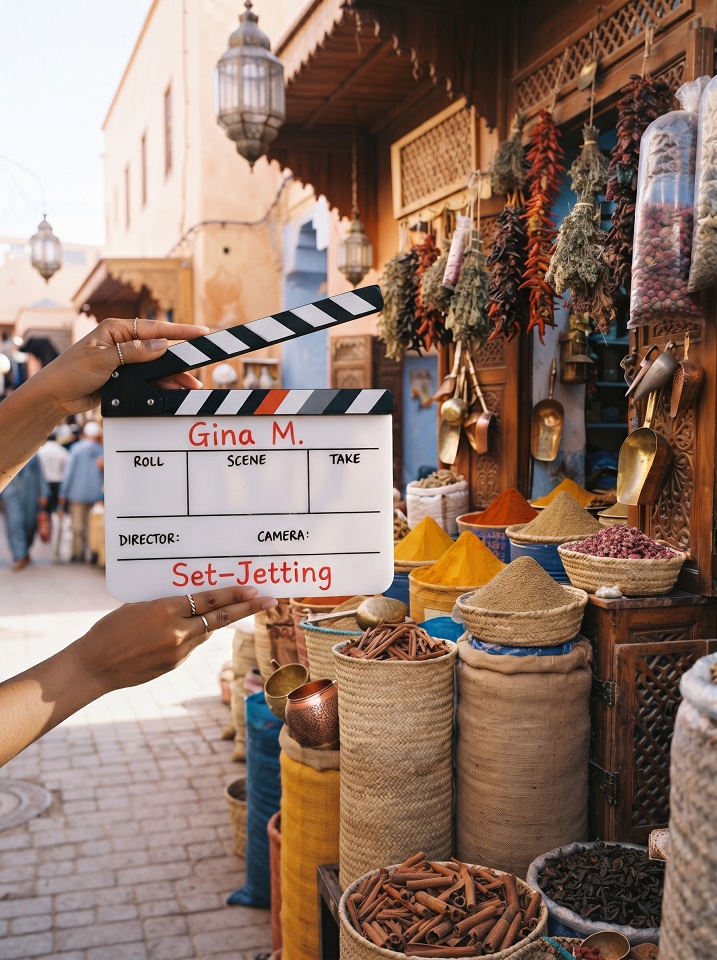
Set-jetting means traveling to places that films and television shows inspire you to visit. It can mean finding an actual filming location, exploring a story’s setting, or chasing its atmosphere. Here’s how I discovered the difference over ouzo in Greece—and what I’d check before booking a screen-inspired trip.
The beach, the dinner and my misplaced confidence
It was 2023. I was lying on a beach in Lefkada, Greece, when a woman called Sofie heard my accent and announced, with great confidence, that I was Australian.
I wasn’t, and I told her so. Somehow that was all it took. We started chatting, and we clicked.
Sofie was Norwegian. Her partner, Alan, was an American-born Oregonian who had been living in Greece for three years. Two days later, we were having dinner in Lefkada town. Sofie had brought her younger sister, Marit, along so I wouldn’t be a third wheel.
I choose to believe it was kindness rather than a rescue operation.
The moussaka was sumptuous. The ouzo arrived at the end, and the conversation drifted to money and travel. Then Marit mentioned she was into set-jetting.
I smiled, assuming a little language mix-up. “Jet-setting, you mean?”
Alan jumped in. “No. She means set-jetting.”
Marit laughed. “I am not dyslexic, you know.”
At which point, my small contribution to international understanding came to an abrupt halt.
What is set-jetting?
Set-jetting means choosing a trip because a film or television series has inspired you to visit. It might involve an actual filming location, the place where a story is set, or a destination that captures its atmosphere.
You’ll also see it called screen tourism or film tourism. However, you don’t need a plane ticket. A train ride to a nearby filming location counts just as well.
The basic process is familiar: watch something, fall for the scenery, look it up, then wonder whether your holiday allowance will stretch to it. Sometimes you want the exact courtyard. Other times, the appeal is simply the landscape.
For me, the term was new. The impulse certainly wasn’t. A good story has been making people want to go places for much longer than streaming services have been asking whether we’re still watching.
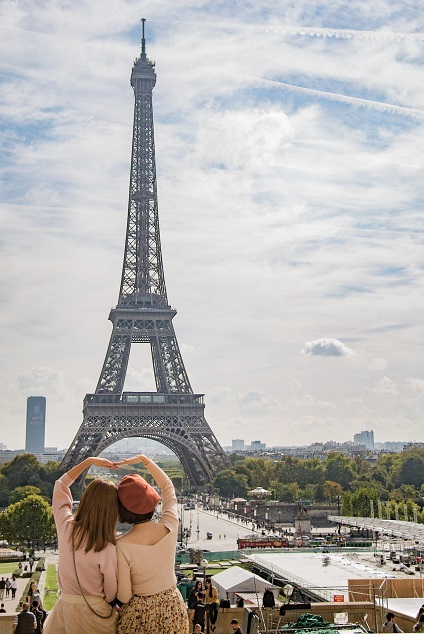
Set-jetting vs. jet-setting
Jet-setting describes a glamorous, frequently traveling lifestyle. Think fashionable destinations, expensive hotels and people who appear to own more sunglasses than socks. A private jet is optional, despite what the name suggests.
Set-jetting describes the reason for a trip. The screen supplies the inspiration; your budget decides the accommodation. You can do it with a bus ticket and a packed lunch.
So Marit wasn’t confusing two words. I was confidently correcting a word I hadn’t heard before. There is probably a lesson in that, although I’d prefer not to dwell on it.
Why screens have become travel brochures
Today, a series can put the same coastline in front of audiences around the world. Meanwhile, social media keeps the scenery circulating long after the credits.
It’s easy to understand the appeal. A beautiful place comes with characters, music and a story you already care about. By the time you start researching flights, it can feel oddly familiar.
Expedia’s Unpack ’26 report, published in October 2025, found that 53% of surveyed travelers said their desire for a screen-inspired trip had grown over the previous year. Among Gen Z and Millennial respondents, 81% reported planning getaways around what they had watched.
Those are survey responses, not a count of completed trips. The wider study covered 24,000 adults across 18 countries who intended to travel within three years.
Even with that distinction, Marit clearly had company. I was the one arriving late to the conversation.
If you’re curious about what draws us to particular places, why do we travel? takes that question beyond the screen.
The Downton Abbey lesson: check the real address
Before you book, separate three things: where the story happens, where filming happened, and what visitors can actually access. They aren’t always the same place.
Downton Abbey is a useful example. The fictional estate is in Yorkshire, but its best-known real-life counterpart is Highclere Castle in Hampshire. Meanwhile, Bampton in Oxfordshire supplies the village setting, as Experience Oxfordshire explains.
In other words, you could have a lovely Yorkshire holiday and still be a very long way from the front door you intended to photograph.
Check the venue’s official visitor information before arranging transport. Opening dates, tickets and access can differ from what an enthusiastic fan’s old blog post suggests. A building appearing on television doesn’t make it permanently open to the public.
Also, a fictional world may combine real landscapes, studio sets and visual effects. The camera has an excellent travel agent. It also has an editing department.
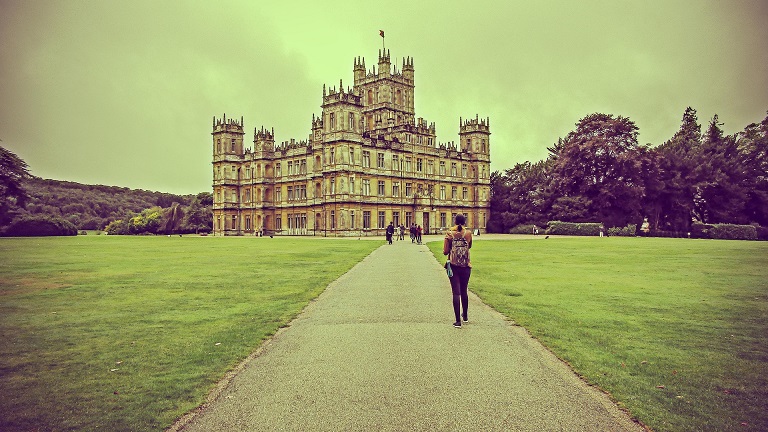
Check the actual filming address before planning your Downton-inspired visit.
A Viking detour to the real Downton Abbey
If Downton Abbey has you eyeing up English country houses, Viking offers an Oxford & Highclere Castle land extension with a Privileged Access visit to the castle and its grounds. A rather good way to follow the story beyond the television—without having to maintain a stately home yourself.
Highclere experiences are offered as pre- or post-cruise extensions on select river and ocean voyages. Viking also offers Great Homes, Gardens & Gin, which includes Highclere alongside other English estates.
Before you book: ask Viking or your travel advisor which extension is available for your specific itinerary, departure date and direction, and confirm the current inclusions and price. An extension is an additional booking, rather than a visit included with every cruise.
Screen-inspired places on the 2026 watchlist
Expedia’s forecast linked eight destinations with productions. These were predictions about travel inspiration, rather than a verified list of accessible film sets or measured visitor growth. That distinction matters when deciding where to go.
| Destination | Screen connection | Before you book |
|---|---|---|
| Yorkshire, UK | Wuthering Heights; Downton Abbey: The Grand Finale | Story setting and screen atmosphere; check individual filming addresses. |
| Tuscany, Italy | Jay Kelly | A destination to research beyond the on-screen itinerary. |
| Samoa | Moana (live action) | Polynesian inspiration; not a claim that the remake was filmed here. |
| Dalmatian Coast, Croatia | People We Meet on Vacation | A forecast pairing; verify any specific filming-site claims. |
| Peloponnese, Greece | The Odyssey | Research the particular sites rather than assuming all are visitor attractions. |
| Los Angeles, USA | Nobody Wants This | Check public access to any exact location. |
| Wellington, New Zealand | Avatar: Fire and Ash | A filmmaking connection, not a walk into the fictional world of Pandora. |
| Palawan, Philippines | The Last Resort | A forecast association; confirm locations and access independently. |
Source: Expedia’s 2026 set-jetting forecast. For context, the Motion Picture Association reports that live-action Moana filmed on Oahu and in Atlanta studios. Samoa is an inspiration pairing, not its filming address. Wellington’s Avatar connection includes production and visual-effects work.
The part we talked about over the ouzo
My concern at dinner was what happens when a fragile place suddenly becomes everybody’s next photograph.
I’ve seen the pressure that concentrated cruise arrivals can put on small islands. Screen tourism can raise a similar question: how many visitors can a place comfortably welcome before everyday life starts bending around them?
A village isn’t a theme park simply because someone filmed there. People still need to get to work, park outside their homes and carry shopping through the street currently hosting somebody’s fifteenth attempt at a candid photograph.
Of course, visitors can bring welcome income to guides, cafés and accommodation owners. However, I’d rather see that money support a place than watch the place become a backdrop with its residents pushed out of frame.
Over dinner, we broadly agreed that popular locations need sensible management. My own contribution was less technical: perhaps we could all stop behaving as though a camera gives us right of way.
How to plan a set-jetting trip you’ll actually enjoy
Start with the screen, if that’s what excites you. Then plan for the real place you’ll be visiting.
- Confirm what you’re following. Find the actual location and check official opening dates, permissions and tickets first.
- Choose a quieter time where practical. Shoulder season or a less busy visiting slot can help. However, check seasonal closures before booking.
- Spend locally. Consider a local guide, an independent café and accommodation that gives you time to explore beyond one photo stop.
- Respect the boundaries. Keep doorways clear, stay on permitted paths and ask before photographing people. Private property remains private.
- Add something unrelated to the show. A market, a walk or a nearby town gives the trip a life beyond its opening scene.
- Test the whole holiday. Would you still enjoy this destination if the famous courtyard were closed? If not, rethink the expense.
For help with that last decision, try Find Your Travel Fit. Then use my Travel Logistics & Transit guide to turn inspiration into a workable route.
My take: I’d rather write my own scene
Honestly, I’m not especially drawn to set-jetting. I prefer to see a landscape through my own reflections, rather than spend the afternoon remembering what someone in an HBO series did there.
That said, I understand the appeal. If a film gets you curious enough to step into a different part of the world, splendid. We all need a nudge sometimes.
My only suggestion is to let the destination take over once you arrive. Have the meal, talk to somebody, turn down the street that wasn’t in the episode. The most interesting part may happen after you’ve put the reference photograph away.
I went to Lefkada for a quiet week by the sea. I came away with three new friends and a word I had confidently tried to correct. No location scout could have planned that particular scene.
Set-jetting FAQs
Set-jetting is travel inspired by films or television. You might visit a filming location, a story’s setting or a destination that evokes its atmosphere.
Jet-setting describes a glamorous travel lifestyle. Set-jetting describes the screen-inspired reason for choosing a trip, whatever your budget.
No. A visit to a nearby filming location can count. The inspiration matters, rather than your transport.
No. Some are private homes, working premises or temporary sets. Check the official venue’s access information and booking requirements.
Which screen has sent you packing?
Has a film or series persuaded you to visit somewhere—or did the real place turn out quite differently? Tell me the title, the destination and whether it lived up to the picture in your head.
Share your story in the comments below. And if you’ve ever confidently corrected a word you didn’t understand, I’d appreciate the company.
Keep exploring
Find Your Travel Fit
Choose a trip you’ll actually enjoy.
Why Do We Travel?
Explore what gets us moving.
Travel Logistics & Transit
Make the route work.
From inspiration to a plan
Build your budget, route and preparation around the kind of travel you want.