AIR TRAVEL · TRAVEL STORIES · UPDATED OCTOBER 2026
Cabin Luggage: The Weird Stuff You Can Actually Take on a Plane
Airport security has a talent for making perfectly sensible adults behave like nervous schoolchildren. You empty your pockets, remove your belt and surrender a bottle of water—then discover that some rather more extraordinary objects may be allowed on board.
In brief: The rules for unusual carry-on items can be surprising. Some sports gear, food, costumes and musical equipment may be permitted, while liquids, sharp objects, batteries and animal travel are tightly regulated. Always check the departure airport, airline and any connecting airport before packing.
By Rob Wheatley — Program Director & traveller
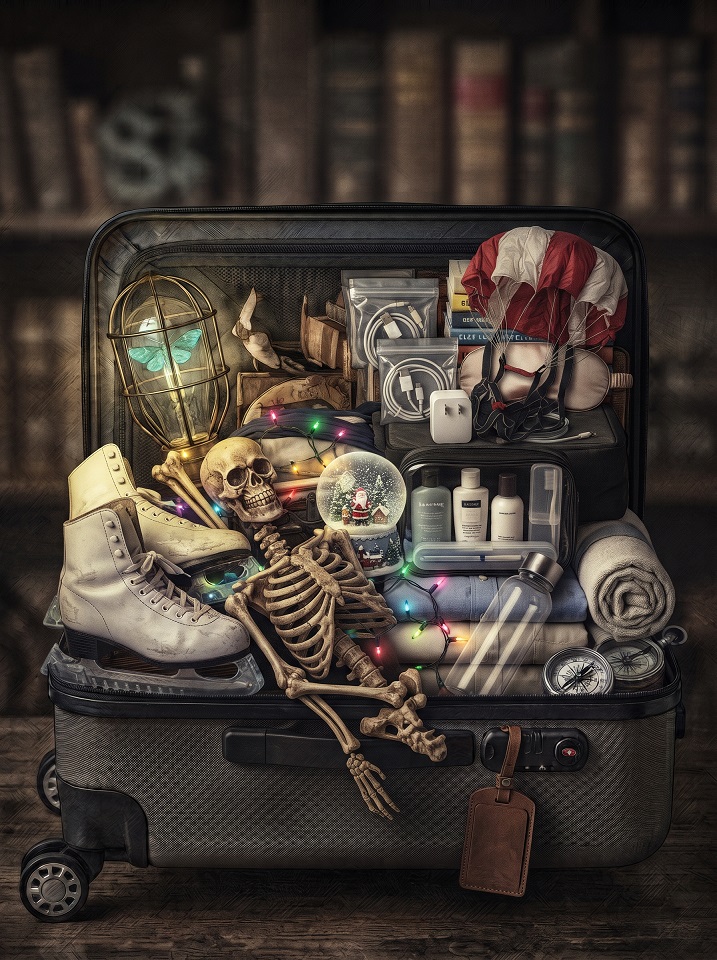
Welcome to the wonderfully strange world of cabin baggage
Air travel has never been short of rules, especially if you’ve found a bargain flight with a cabin-bag allowance apparently designed for a toothbrush and one clean sock. But some items permitted through airport security are so unexpected that you wonder who first turned up carrying one.
Before we explore the oddities, a vital distinction: security permission is not the same as airline permission. An object might pass screening but be too large for the cabin, prohibited by the carrier or restricted at your destination. Security officers can also refuse an item they judge unsafe.
The peculiar things that may pass security
Ice skates: Yes, surprisingly, the US Transportation Security Administration (TSA) lists ice skates as permitted in carry-on bags. But protect the blades and check your airline’s rules before taking your winter Olympics ambitions into the overhead locker.
Artificial skeleton bones: Halloween props and realistic-looking fake bones may be permitted. Real human remains are a different matter, governed by special transport and documentation rules. Please don’t interpret a costume allowance as permission to take Great-Grandad sightseeing.
Snow globes: Small ones may be permitted under applicable liquid restrictions. Bigger globes are another story. A charming miniature winter scene is still a container of liquid to a security scanner.
Parachutes: TSA allows parachutes in carry-on or checked baggage, subject to screening and airline size restrictions. You may have to be present for an inspection. Bringing your own parachute does not, I should add, entitle you to a different exit procedure.
Christmas lights and empty water bottles: Generally permitted by TSA. The lights might brighten the season; the empty bottle is simply sensible. Fill it after security where permitted.
These are examples from the TSA’s official searchable list, not a promise about every airport in the world.
The items that seem ordinary but cause trouble
Power banks are a classic example. Spare lithium batteries and portable chargers generally belong in your carry-on baggage, not checked baggage, with capacity limits and additional airline restrictions. Larger batteries may require approval or be prohibited. Consult the FAA’s current battery guidance and your airline.
Tools, sporting equipment, knives and anything resembling a weapon can be restricted even when the traveller has entirely innocent intentions. Never assume that because an object is useful—or sold in an airport shop—it can travel in the cabin.
And please don’t pack anything that looks like a weapon purely to see whether the security officer has a sense of humour. Airports are not a good venue for experimental comedy.
Liquids: the rules are no longer identical everywhere
For years, the 100 ml rule was practically a law of nature. Today the picture is more complicated. At many airports, liquids still need to be in containers of no more than 100 ml, sometimes inside a clear resealable bag. But airports with newer screening systems may allow larger containers.
For example, Heathrow currently allows liquids in containers up to two litres through security, while UK government guidance says most UK airports still apply the 100 ml limit. Connecting and return airports may have different rules.
The practical lesson: Check each airport on your itinerary—not just the one where you begin. Medication, baby food and special dietary liquids can qualify for exemptions, but may need separate screening or supporting documentation.
What about food, animals and other odd companions?
Solid food is often acceptable through security, but spreads, sauces, soups and other liquid or gel foods may be subject to liquid limits. International agricultural and customs rules are a separate issue: a snack you can take onto the aircraft may still be prohibited when you land.
As for travelling with animals, forget the old assumption that declaring an animal an “emotional support” companion automatically grants it a cabin seat. Airlines distinguish trained service animals from pets and emotional-support animals, and the rules vary by country, airline, route and animal type. Check the carrier’s policy and the destination’s import requirements well before booking.
No, this does not mean your grumpy, jet-lagged husband can be registered as a support animal. I’ve checked the spirit of the regulations, if not that particular application form.
Musical instruments and oversized ambitions
A violin may be straightforward; a cello or harp requires more planning. Some airlines offer options for a large instrument to travel in a purchased seat, subject to advance approval and specific conditions. Others require checked carriage or cargo arrangements.
Don’t turn up with a double bass and expect the overhead locker to negotiate. Check dimensions, protection, fees and booking requirements with the airline before departure.
My quick carry-on reality check
1. Check the airport: Search the official security list for your departure and transfer airports.
2. Check the airline: Confirm cabin bag dimensions, weight, number of pieces and any special-item approval.
3. Check the batteries: Power banks, spare lithium cells and smart luggage need particular attention.
4. Check your destination: Customs, agriculture and animal-import restrictions apply even after you’ve successfully boarded.
5. Leave room for common sense: If an item could alarm another passenger or a security officer, consider whether it really needs to travel in the cabin.
A final thought from the security queue
After a long flight, most of us resemble extras from a low-budget zombie film. We are not at our most alert when we’re standing in socks, holding a plastic tray, trying to remember whether our laptop is still in the bag.
Yet there is something wonderfully absurd about a system that may allow ice skates and a parachute while rejecting an oversized pot of jam. There are good safety reasons behind many of these distinctions, but that doesn’t make them any less entertaining.
So pack sensibly, check the current rules and save your surprises for the destination—not the security scanner.
Have you ever had a strange item questioned at airport security? Tell me what happened in the comments. The more peculiar, the better.
Check before you pack
TSA: What Can I Bring? · FAA: Battery Safety · UK hand luggage rules
More from the site: Packing Guide · Air Travel Sagas · Fear of Flying.