Spain · Castilla y León
Salamanca: The Golden City With an Astronaut on the Cathedral
Golden stone, an ancient university and a main square I could sit in for hours. Salamanca has plenty of grandeur—and just enough mischief in the carvings to keep me happy.
By Rob Wheatley · Viking Program Director · Updated in 2026
Salamanca at a glance
My priority: Plaza Mayor, the university façade and the cathedral area.
A short window: keep to the compact historic centre.
With more time: Las Dueñas, La Salina and the Tormes.
On foot: allow for uneven paving, slopes towards the river and stairs on tower visits.
From Portugal: put your clock forward one hour.
An astronaut among the saints
Stand outside the New Cathedral in Salamanca, look at the carved doorway, and give yourself a minute. Somewhere among the saints and stonework, there’s an astronaut.
I’m not joking. During a restoration in 1992, modern figures were added to the Puerta de Ramos: an astronaut in a spacesuit and, nearby, a dragon enjoying an ice cream. The city’s cathedral guide confirms them. No ancient space travellers required.
It tells you something about Salamanca. This is a city that takes its history seriously, but not so seriously that it can’t smile at itself.
Why they call it La Dorada
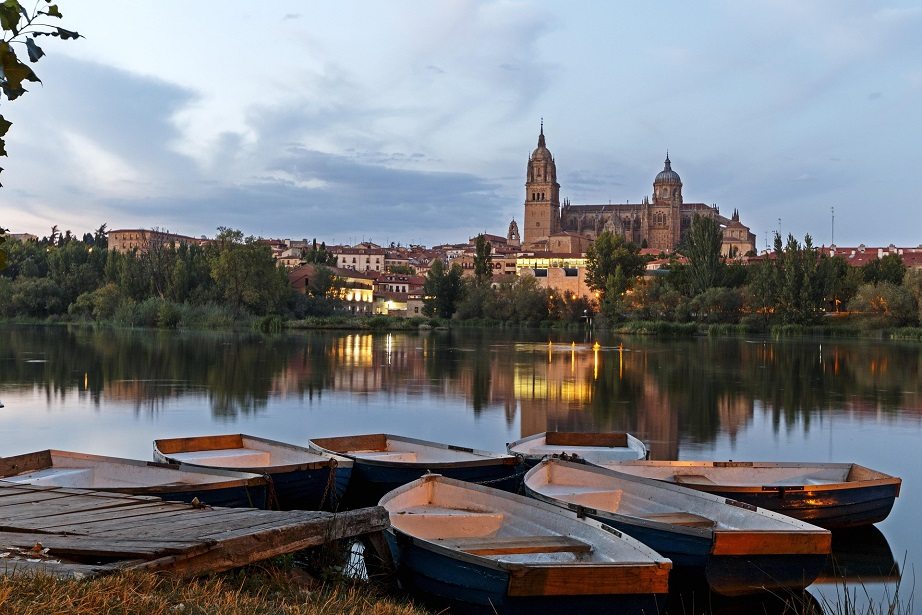
Arrive in the late afternoon and you’ll get it straight away. The warm sandstone glows gold in the setting sun, so the old town can look as though it’s been dipped in honey. UNESCO inscribed the Old City of Salamanca in 1988. It’s one of those places where you spend half your time looking up.
I’d give the light a little room in the plan. Salamanca rewards an overnight stay: its evening atmosphere is a different experience from a hurried lunchtime stop.
Getting there—and parking sensibly
By road: from Madrid, allow roughly two and a half hours, depending on your starting point, traffic and stops. From Porto, think in terms of around four hours or more. From the Douro, it is a substantial outing; Barca d’Alva makes a useful connection in a broader trip.
Parking: check access restrictions before following a navigation app into the historic centre. I suggest a signed car park around its edge, then walking in. The old town is compact, but paving, gradients and tower stairs still matter if mobility is a concern.
From Portugal: mainland Spain is one hour ahead. Your phone will usually adjust; your watch and your dinner reservation may need a little help. On a guided excursion, follow the meeting time given by your team.
Plaza Mayor: the best living room in Spain
If I had to pick one reason to come, it would be the Plaza Mayor. This grand eighteenth-century Baroque square is ringed by arcades, cafés and carved medallions. Grab a table, order a coffee or a caña, and watch the city drift past.
By night the square lights up gold, and it’s pure theatre. I could happily sit there for an entire afternoon, and I frequently have. A grand square that actually feels lived in is a fine thing.
The university—and that ridiculous frog
The University of Salamanca traces its foundation to 1218, making it Spain’s oldest continuously operating university and one of Europe’s oldest. Its historic façade is a masterpiece of intricate carving. And yes, this is where the frog is hiding.
Spotting it without help is said to bring good luck. It’s perched on a skull among the carvings above the doorway. Tell your travelling companions it’s easy. Then watch them suffer.
Inside the university’s story is one I love. Fray Luis de León was imprisoned by the Inquisition for years. Tradition says that when he returned to teaching, he began, “as we were saying yesterday.” Whether or not those were his exact words, the tale captures something wonderfully stubborn about the place.
For current access and visits, start with the university’s own visitor information. Admiring a façade and entering the historic buildings are different plans.
Seashells and two cathedrals
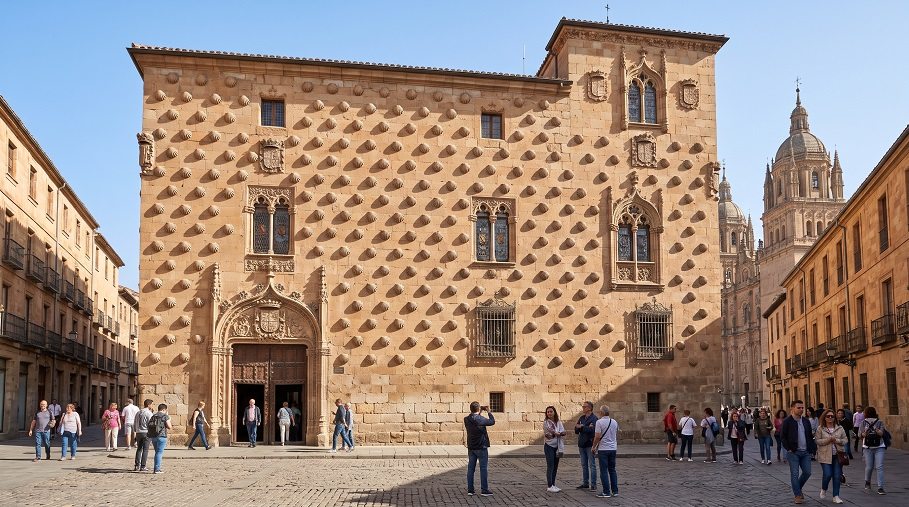
Casa de las Conchas, the House of Shells, wears hundreds of carved scallop shells on its façade. The shell motif is associated with Santiago pilgrimage and the Order of Santiago. Today the building houses a public library. Take a look at its courtyard when open, checking current access rather than assuming every part is available.
The Old and New Cathedrals stand together, offering Romanesque, Gothic and Baroque layers in one remarkable complex. The tower route is a separate visitor experience with stairs and its own access arrangements. Check what your ticket includes before you start climbing.
The astronaut is a delightful detail, but don’t let him distract you from the rest of the building. Centuries of architecture deserve slightly more attention than a man in a spacesuit.
Two quieter corners worth a look
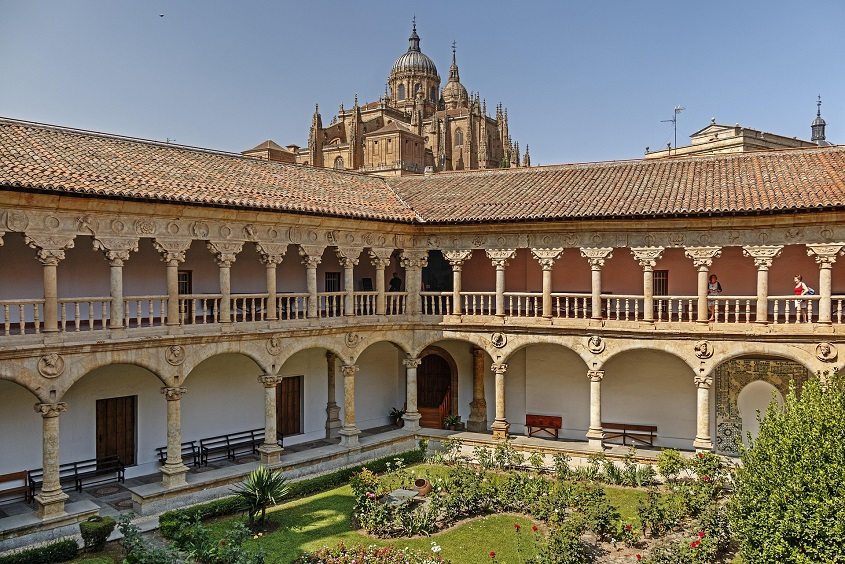
If you have more time, I’d consider the cloister of Las Dueñas for its carved capitals and the way the cathedral rises beyond it. It is a good place to slow the pace after the bigger landmarks. Check the convent’s visiting hours and admission arrangements.
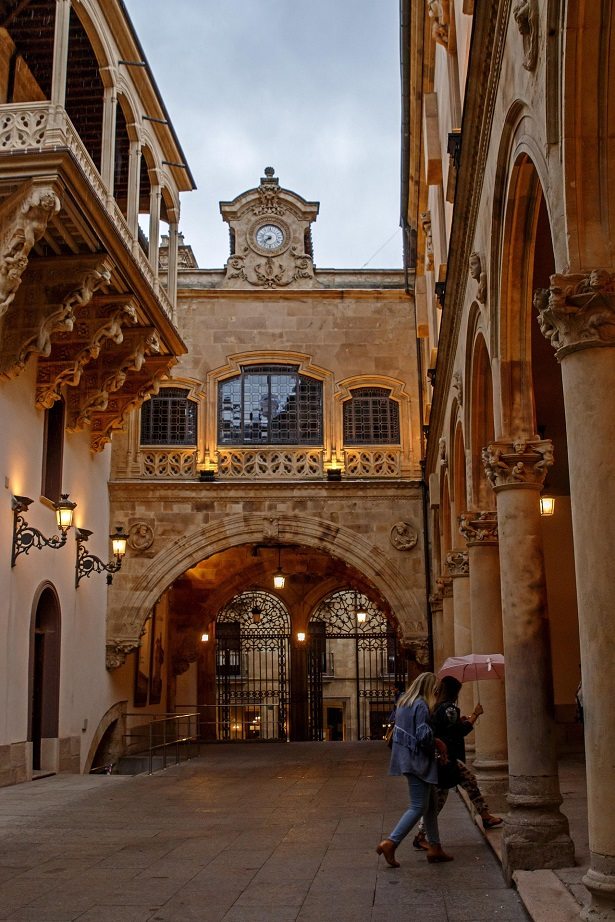
Palacio de la Salina offers another change of scale: look at the stonework around its courtyard rather than march past another doorway. These smaller spaces are part of Salamanca’s appeal. The city is more than a square, a frog and a very unusual cathedral carving.
Keep both as choices for independent time, not promises about what a short guided visit will include. The official tourism site is the place to check current opening information.
A Roman bridge and a quieter river
Walk towards the Puente Romano over the River Tormes for a different view of the city. The bridge includes surviving Roman arches and later rebuilt sections, rather than being an untouched structure from antiquity.
I like the river as a pause after the enclosed streets. Around sunset, the cathedral skyline and the water can make a persuasive case for staying a little longer. Allow for the walk back uphill if your next stop is in the old town.
What to eat and drink
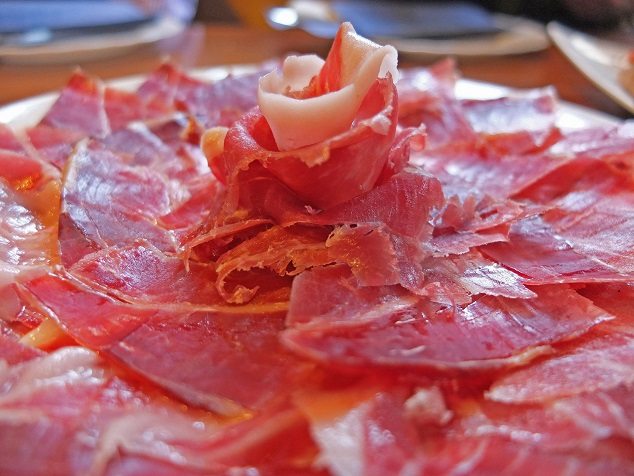
- Jamón ibérico: the celebrated cured ham, sliced thin and enjoyed without much ceremony. Ask about the producer and style rather than assuming every plate is identical.
- Tapas and pinchos: order a drink and see what the bar offers. Some pair a small bite with it; others charge separately. Check the arrangement rather than expecting every tapa to be free.
- Farinato: a spiced regional speciality, particularly associated with Ciudad Rodrigo, made with bread and pork fat among its ingredients. It is not simply another meat sausage. Try it with eggs if you see it on the menu.
- Hornazo: a substantial savoury pastry filled with cured meats. Strongly associated with Lunes de Aguas after Easter, it is also sold through the year. A picnic food with absolutely no intention of being a light snack.
A student town, and when I’d visit
The university keeps Salamanca lively. Medieval stone and Saturday night live side by side, which is part of the charm—unless your room is directly above the Saturday night. Check the location if you value sleep.
For sightseeing, I’d look first at spring or early autumn. Neither guarantees quiet streets or perfect weather. Easter brings processions, September brings the city’s festivities, summer can be hot and winter can be cold. Choose dates around the experience you want, then check the actual programme.
For Viking guests: a Spanish day from the Douro
Salamanca is a coach excursion on Portugal’s River of Gold. The ship does not sail here. It is a full day away from the river, so keep essentials, water and a layer in your day bag.
Follow the included visit, then choose one priority for your free time. A long lunch, tower climb and extra museum do not all fit simply because the city looks compact on a map. Admission to every attraction mentioned here is not automatically included in your excursion.
Confirm the meeting place and time with your guide, including which country’s clock is being used. Barca d’Alva and Castelo Rodrigo help put the border-country journey into context.
Open my River of Gold itinerary →My verdict
Salamanca is the rare city that manages to be both grand and friendly. It’s got centuries of history carved into its walls, an astronaut on a cathedral, a frog you’ll lose sleep over, and a main square that makes you want to cancel your plans.
Stay overnight if you can. The city is at its best when the sun goes down and the stone turns to gold.