Hungary · Destination guide
Kalocsa: Paprika, Painted Flowers and a Day on the Hungarian Plain
The paprika gets the headlines in Kalocsa, but the flowers catch my attention too. Painted walls, embroidery and red peppers give the place a character of its own. A useful reminder that the Hungarian plain offers more than scenery glimpsed on the way to Budapest.
But give the flowers some attention too. The embroidery and painted walls belong to a living local tradition, not simply a souvenir display. I’d make time for both sides of the town: what goes into the cooking pot and what comes out of a very skilled pair of hands.
By Rob Wheatley · Traveller and Viking Program Director
Explore the Hungary destination guide →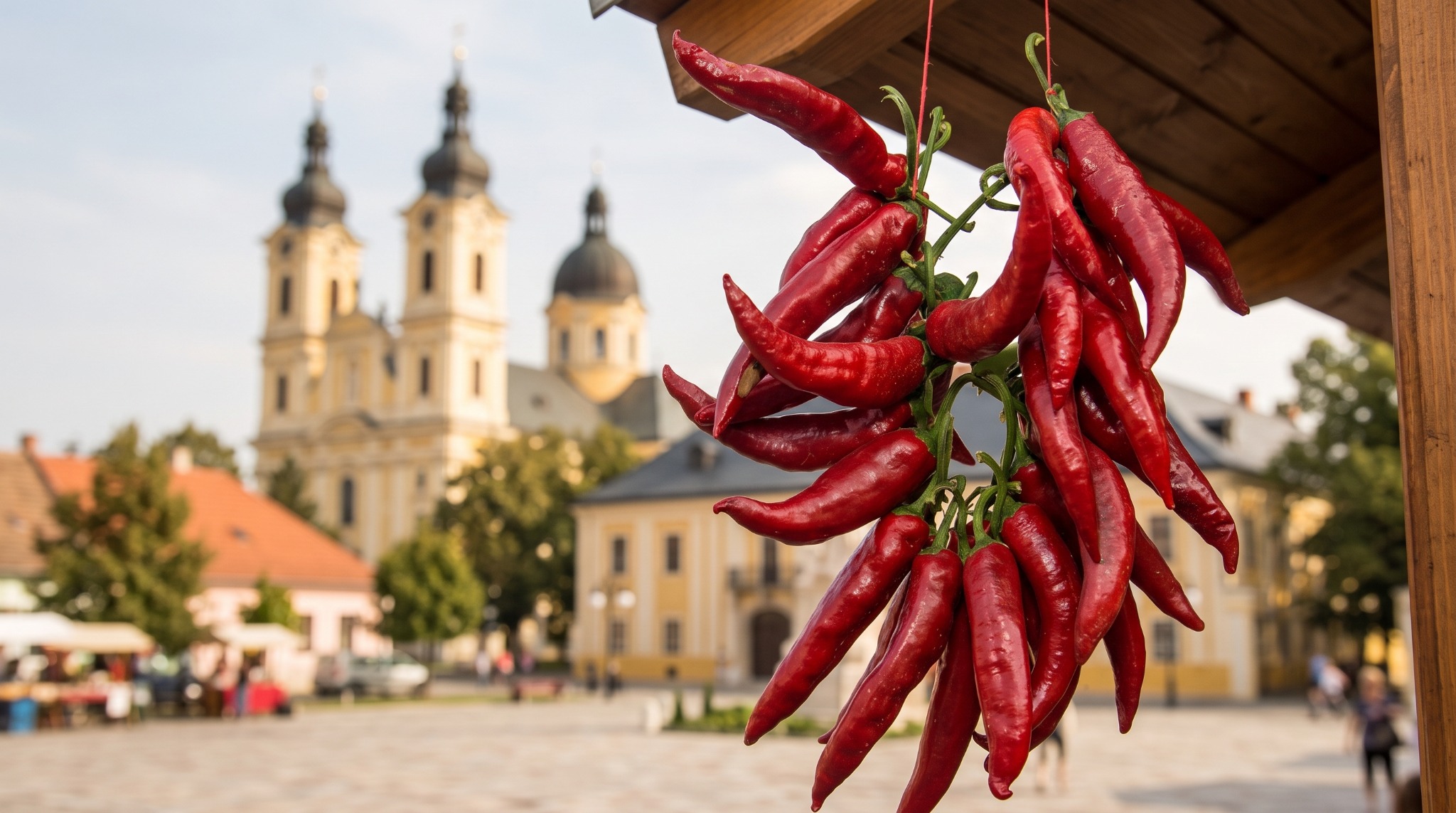
Kalocsa at a glance
- My priority
- The paprika story and the town’s floral folk art, with a look at the cathedral square.
- If time is short
- Choose one exhibition you genuinely want to see, then leave time to enjoy the centre.
- Walking and access
- Check the precise museum entrance, interior stairs and any countryside excursion requirements.
- Something to take home
- Clearly labelled local paprika or a piece of craftwork whose maker and production method you understand.
The spice the poor man could afford
Paprika peppers came from the Americas. In Hungary, they became much more than an imported curiosity. Dried and ground, they offered a way to season food when imported black pepper was expensive. What began as humble cooking helped turn paprika into a national signature.
The museum’s account connects the substitution of red pepper for black pepper with the Napoleonic period. Kalocsa and its surrounding growing region became one of the great centres of Hungarian paprika. A kitchen ingredient became a crop, an industry and an identity: the country’s red gold.
I like that story because it begins with ordinary meals rather than a royal banquet. Farmers and shepherds needed flavour too. Over time, an affordable seasoning became something Hungarian cooking would be difficult to imagine without.
There is a paprika museum in Kalocsa, and it is a useful way to put the strings of peppers into context. Check current visitor arrangements before going specifically for it: public listings give differing addresses, and some show seasonal hours. The local visitor centre or museum can confirm where the exhibition is operating for your dates.
Buying paprika without buying a surprise
Red does not automatically mean hot. Ask whether you are buying sweet or hot paprika, check the origin and read the packaging. If the seller offers a tasting, let that answer the question your eyes cannot.
I’d buy something I actually want to cook with rather than the largest decorative sack in the shop. A sealed, labelled packet is easier to understand when you get home and discover that your excellent holiday memory has not preserved the Hungarian instructions.
For a regional product, look for clear information about where it was grown and processed. Kalocsa’s ground paprika has protected-origin recognition; a picture of a pepper on a souvenir is not the same thing as that provenance.
The flowers on the walls
Kalocsa is also famous for bursts of red, blue, green and other vivid colours worked into flowers. You find them in embroidery and in pingálás, the freehand painting of floral decorations on walls. These are related traditions, carried by people who draw, paint and stitch.
The Smithsonian describes Kalocsa’s folk arts as living practices, sustained by local makers, museums, groups and schools. The Hungarian heritage register places them in the wider community of villages around Kalocsa. That matters: this is a regional culture, not a pattern invented for a tourist tea towel.

Look closely at the work rather than just the overall splash of colour. Ask how a piece was made and who made it. A printed floral motif and hand embroidery can both be attractive, but the difference should be reflected in what you are told and what you pay.
I’d rather leave with one small piece I understand than three things described vaguely as “traditional.” Beautiful work deserves a better introduction than a price sticker.
Give the cathedral square a little time
Paprika and flowers are memorable, but Kalocsa is also an archiepiscopal centre. The cathedral and the buildings around Szentháromság tér give the town another layer of history and a different visual scale.
Check visiting arrangements for the cathedral and church collections separately from the folk-art and paprika exhibitions. A stop in the square does not necessarily include entry to every building around it. Services and organised visits may shape what is possible.
I’d use this part of the walk to slow down. You have already met the town through food and craft; now look at the setting those traditions share.
A sensible visit to Kalocsa
For an independent visit, begin by confirming which exhibitions are open, where they are and whether you need to arrange admission. Then build a modest circuit around the centre rather than travel with a list of museums whose doors you have not checked.
If you are combining town sightseeing with a Puszta horsemanship visit, allow for the transfer and the performance schedule. The town and the countryside outing are different parts of the day.
For access needs, ask about specific entrances, stairs, seating and surfaces. A short stop can still involve a difficult doorway or a stretch of uneven ground; the useful answer is about the actual route, not a general description of the town.
Make the journey part of the plan
Allow: Half a day for a museum, cathedral area and some unhurried shopping. For an independent trip, check a current coach connection or arrange a road journey from your base. Kalocsa town and a cruise landing outside it are not interchangeable arrival points.
When: I’d choose a mild spring or autumn day; summer sightseeing is kinder earlier or later in the day. Paprika displays and events vary by season, so check the town’s current information if a particular festival or museum matters to you.
At lunch: Look for a Hungarian paprika-led dish and ask whether the paprika is sweet or hot. Gulyás is a useful starting point, not a promise that every kitchen makes it the same way. For a souvenir, origin and heat level are more helpful than the fanciest cloth bag.
For river cruise guests
Visiting with Viking?
Included programme: Viking’s published 2027 Passage to Eastern Europe itinerary lists Kalocsa & Puszta, combining a cultural visit with a display of traditional horsemanship. Check your own excursion description for the sites, walking demands and coach time.
Optional, at additional cost: the published programme also lists The Art of Cooperage & Hungarian Wine Making. Compare the timing and content with the included outing before choosing.
A call labelled Kalocsa does not establish your precise berth or mean you can walk directly into town. Confirm the ship’s location, movements, meeting point and all-aboard time before exploring independently. Nor should you assume that the paprika museum or a particular craft demonstration is included unless your excursion description says so.
Checked against Viking’s published 2027 programme on 7 November 2026. Your booked sailing confirms inclusions, availability and timing. I work for Viking; this is my own practical guidance.
Explore Passage to Eastern Europe →Explore more of Hungary and the Danube
Planning sources
History and visitor information checked 7 November 2026. Confirm current exhibition locations, opening arrangements and your sailing’s daily programme.
What caught your eye in Kalocsa?
The paprika, the painted flowers or the horsemanship? Share a useful tip, a favourite piece of craftwork or a question about planning your visit.
Join the conversation below ↓