VIKING • BEHIND THE SCENES
What Does a Viking Program Director Do? The Art of Swanning
People hear that I work on a river ship and imagine a permanent holiday with occasional announcements. Apparently, the microphone is the only thing standing between me and retirement.
If only.
A Viking Program Director helps guests make the most of their river journey. My work combines excursion coordination, clear information, onboard hosting and problem-solving alongside the wider team. The public-speaking part is easy to see. On my itinerary, that responsibility also covers the pre- and post-cruise hotel stays. Most Viking river Program Directors work aboard the ship.
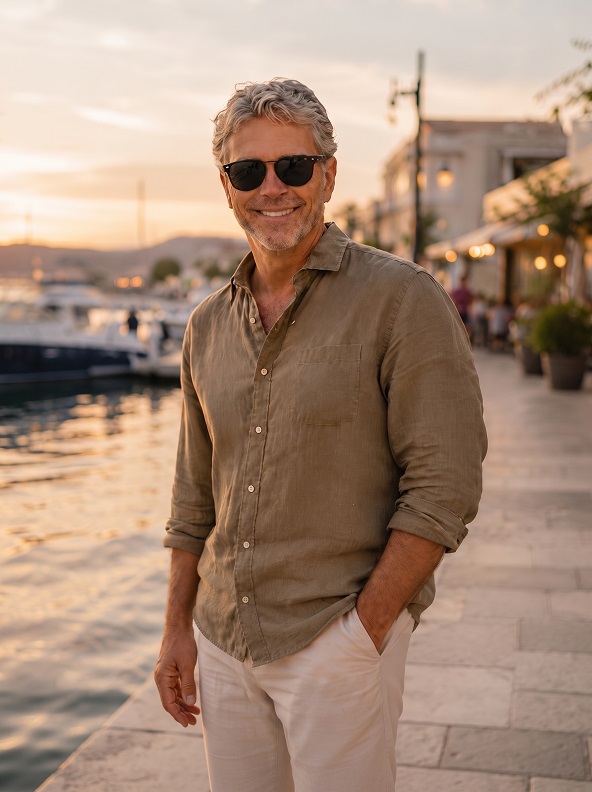
By Rob Wheatley – Program Director & traveler
The Microphone Is the Visible Bit
“I’m good with people. I enjoy travel. I could do your job.”
I hear versions of that quite often. Usually, I smile. Those are useful starting points, and I certainly enjoy what I do. Otherwise, I would have found a less complicated way to see Europe.
However, enjoying a holiday and helping deliver one are different activities.
As a Program Director, I help guests understand what happens next. I coordinate with colleagues, guides and transport providers. I host, explain, listen and deal with problems. Meanwhile, the captain and nautical team handle the ship. The hotel team has its own responsibilities. A good journey depends on all of us working together.
My earlier life in radio and television certainly helps with a microphone. But a confident announcement cannot summon a missing coach. Nor can it create a hotel room that housekeeping has yet to finish.
That is where the rest of the job begins.
My Role Also Takes Me Ashore
There is an important distinction about my itinerary. Most Viking river Program Directors work aboard the ship. My role also covers the pre- and post-cruise parts of the journey, so I work in the hotels too.
That means my work with guests extends beyond their time on board. The arrival-day examples below come from that hotel side of my role. They do not describe what every Viking Program Director does on every itinerary.
What the Job Looks Like Behind the Scenes
| What guests see | What I am working on |
|---|---|
| A clear briefing | Turning arrangements into information people can actually use |
| An excursion departure | Coordinating with guides, drivers and colleagues |
| A change of plan | Finding practical alternatives and explaining what happens next |
| A guest asking for help | Listening, involving the right team and checking back |
| An enjoyable onboard gathering | Preparing and hosting, while keeping an eye on the group |
This is my account of the role on European river journeys. It is not a promise that every ship or departure works identically.
The Art of Swanning
The ideal appearance is that of a swan: calm on the surface, paddling furiously underneath.
A coach may fail to arrive. A guide may be unavailable. Rain can rearrange everyone’s enthusiasm. River conditions can force a change of plan.
You need to adapt without turning your anxiety into the guests’ problem.
That does not mean pretending everything is fine. People deserve an honest explanation. If I do not know something, I need to say so and find out.
Calm comes from giving people a useful next step. What do we know? What are we doing? When will I update them?
Guests often cope better with a change when they understand it. Silence leaves far too much room for the imagination.
The Room I Cannot Magically Produce
On the pre-cruise hotel part of my itinerary, arrival day provides an excellent reality check.
A guest has crossed an ocean. They are tired, their body clock has surrendered, and they want a shower. Perhaps their luggage has taken a separate holiday.
Then I explain that the hotel room is not ready.
An early arrival does not guarantee early check-in. If the hotel was full the previous night, housekeeping needs time. Our hotel hosts work hard to match arrivals with available rooms. Nevertheless, I cannot build another bedroom beside reception.
The guest may understand this intellectually. At that moment, however, they mostly need sleep.
My job is to acknowledge the frustration and offer whatever practical help is available. That might mean checking luggage storage or suggesting somewhere nearby to sit comfortably. I also need to explain the next step clearly.
Being technically correct is a poor substitute for being helpful.
Follow-Up Is Where the Job Earns Its Keep
Early in this sort of work, you learn an uncomfortable lesson. Happy guests are much easier to approach than angry ones.
Naturally, you drift toward the smiles. The person who challenged you earlier becomes strangely difficult to find.
I have made that mistake. Avoidance does not solve the problem. It simply gives it time to grow.
A complaint gives us information we can act on. Sometimes we can fix the issue. Sometimes we can offer an alternative. Occasionally, the answer remains disappointing.
In each case, I need to listen, explain the limits and follow up. If I promise to find something out, I must return with an answer. Even an unwelcome answer is better than disappearing.
There is another balance here. One person’s problem deserves attention, but the rest of the group matters too. Effective hospitality requires judgement as well as kindness.
Home Is Where the Anchor Is
The scenery is wonderful. The time away from home is real.
Relationships need trust. Family, friends and pets cannot share the everyday moments when you are working elsewhere. You come home for a concentrated burst of ordinary life. Then you pack again.
This lifestyle suits some people far better than others. I enjoy the changing landscape and the absence of monotony. Still, enjoying the work does not remove its cost.
“Home is where the anchor is” makes a cheerful line. It is also a fairly substantial lifestyle decision.
The Birthday I Forgot—and the Guests Did Not
During a Viking Alsvin cruise in 2023, I became so absorbed in the journey that I forgot my own birthday.
I discovered it through messages on my phone. Friends and family had remembered what I had somehow overlooked.
I mentioned this to a guest, laughing at myself. That should have been a warning. News travels efficiently on a river ship.
Later, our guests gathered near Trier’s Porta Nigra at the end of a tour. Suddenly, about 170 voices began singing “Happy Birthday” to me.
In public. En masse. With absolutely nowhere for the Program Director to hide.
It was touching, mildly embarrassing and completely unforgettable.
For much of a cruise, I concentrate on what the guests need. Then they do something like that, and the care comes back the other way.
That is the part no job description can properly explain.
So, Could You Do It?
Perhaps. Liking people and public speaking certainly helps. So does enjoying travel.
But ask yourself a few harder questions:
- Can you stay useful when the plan changes?
- Can you listen without treating every complaint as a personal attack?
- Can you admit what you do not know, then find the answer?
- Will you approach the unhappy guest again?
- Does extended time away from home suit your life?
For formal requirements and current opportunities, use Viking’s official careers website. Its river guest-services information places the Program Director within that wider guest-care operation.
My perspective here is personal, rather than an official recruitment description.
Why I Keep Doing It
At the end of a good journey, you see the difference. People relax. Strangers find friends. A place they once knew only from photographs becomes a memory of their own.
Knowing I helped make that happen is enormously rewarding.
So yes, it is a wonderful job. It asks rather more of you than a pleasant voice and a suitcase.
And occasionally, if you are very fortunate, an entire tour group remembers your birthday before you do.
Questions About the Role
The captain and nautical team manage the ship’s navigation and operation. My work centres on the guest programme and experience, alongside the hotel and shoreside teams.
Most Viking river Program Directors work aboard the ship. My itinerary also includes responsibility for the pre- and post-cruise hotel stays. That is why hotel arrivals feature in this account.
Public speaking is the visible part. Coordination, problem-solving, listening and follow-up take substantial attention behind the scenes.
It is my account of the work. For current vacancies and requirements, consult Viking Careers directly.
Continue Exploring
Over to You
Have you travelled with a Program Director who made a difference to your journey? What did they do that stayed with you?